
Anúncios
# Unlocking the World of Braille: Discover Its Meanings and Learn to Interpret Through Apps
Braille isn’t just dots on a page—it’s a gateway to independence, literacy, and connection for millions of people worldwide. Understanding its structure can transform how you perceive accessibility.
Anúncios

Whether you’re a parent supporting a visually impaired child, an educator seeking inclusive teaching methods, or simply someone curious about tactile writing systems, learning Braille opens doors you never knew existed. The beauty of modern technology is that you no longer need specialized equipment or years of formal training to begin your journey.
Today’s smartphone apps have revolutionized how we approach Braille literacy, making it accessible to anyone with curiosity and commitment. These digital tools break down complex patterns into manageable lessons, offer interactive practice sessions, and provide instant feedback—all from the convenience of your pocket. Let’s explore how you can master this essential communication system and why it matters more than ever in our increasingly digital world.
Anúncios
## 📖 What Exactly Is Braille and Why Does It Matter?
Created by Louis Braille in 1824, this tactile writing system uses raised dot patterns arranged in cells of up to six dots. Each unique configuration represents letters, numbers, punctuation marks, and even musical notation. The system’s genius lies in its simplicity—with just 63 possible combinations, it conveys the full richness of written language.
For visually impaired individuals, Braille literacy correlates directly with employment rates, educational achievement, and overall quality of life. Studies show that blind adults who learned Braille are significantly more likely to be employed than those who didn’t. It’s not just about reading—it’s about independence, dignity, and full participation in society.
Beyond the practical benefits, learning Braille cultivates cognitive skills valuable to everyone. The tactile discrimination required strengthens neural pathways, improves spatial reasoning, and enhances memory formation. Teachers working with Braille students often report improvements in their own observational and teaching abilities.
## 🔍 Decoding the Braille Cell: Understanding the Foundation
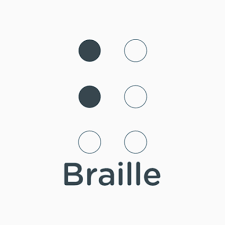
The basic Braille cell consists of six dots arranged in two vertical columns of three dots each. Dots are numbered 1-2-3 from top to bottom on the left, and 4-5-6 on the right. This standardized numbering system is crucial for understanding Braille notation worldwide.
Grade 1 Braille (uncontracted) represents each letter individually, making it ideal for beginners. Grade 2 Braille (contracted) uses abbreviations and contractions to save space and increase reading speed—similar to how we use “don’t” instead of “do not” in written English.
Here’s how common letters translate to dot positions:
- Letter A: Dot 1 only
- Letter B: Dots 1-2
- Letter C: Dots 1-4
- Letter D: Dots 1-4-5
- Letter E: Dots 1-5
- Letter K: Dots 1-3 (same pattern as ‘A’ but moved down)
- Letter W: Dots 2-4-5-6 (historically added later)
The logical progression continues through the alphabet, with patterns building systematically. Once you understand the first ten letters, the remaining letters follow predictable rules, making memorization surprisingly manageable.
## 📱 Revolutionary Apps That Teach Braille Effectively
Technology has democratized Braille education in extraordinary ways. Where formal instruction once required specialized teachers and expensive materials, today’s apps provide comprehensive training at minimal or no cost. These applications use gamification, progress tracking, and adaptive learning algorithms to personalize your experience.
Braille Tutor stands out as one of the most comprehensive learning platforms available on Android. It breaks down the Braille alphabet into digestible lessons, starting with basic letter recognition before advancing to contractions and complex words. The app’s strength lies in its systematic approach—each lesson builds upon previous knowledge without overwhelming new learners.
Braille Academy offers iOS users an engaging pathway to literacy through interactive games and challenges. The app transforms what could be tedious memorization into an enjoyable experience, using visual and audio feedback to reinforce learning. Its play-learn approach makes it particularly effective for younger learners or those who struggled with traditional educational methods.

These applications typically include features like:
- Progressive lesson structures that adapt to your learning pace
- Visual representations showing dot positions for each character
- Audio pronunciation guides helping connect Braille symbols to sounds
- Practice exercises with immediate correctional feedback
- Tracking systems that monitor your progress and identify weak areas
- Offline functionality allowing learning anywhere, anytime
- Multi-language support expanding your linguistic capabilities
## 🎯 Practical Strategies for Effective Braille Learning
Success with Braille requires consistent practice and proper technique. Unlike visual reading, which we can do passively, tactile reading demands active engagement and refined touch sensitivity. Start by developing light touch—pressing too hard actually reduces sensitivity and slows reading speed.
Dedicate 15-20 minutes daily rather than occasional marathon sessions. Consistency trains your fingertips’ sensitivity and reinforces neural pathways more effectively than sporadic intensive study. Think of it as building muscle memory—regular, moderate practice yields better results than infrequent intensive effort.
Use both hands efficiently. Experienced Braille readers typically use their index fingers, with the right hand reading ahead while the left hand finishes the current line. This technique dramatically increases reading speed once mastered, though beginners should focus on single-finger accuracy first.
Practice on real Braille materials whenever possible. While apps provide excellent foundational knowledge, nothing replaces the tactile experience of actual embossed dots. Libraries, educational resource centers, and advocacy organizations often lend Braille books or provide practice sheets free of charge.
Join online communities where learners share experiences, challenges, and victories. Forums, social media groups, and video channels dedicated to Braille learning offer motivation, troubleshooting advice, and the accountability that sustains long-term commitment.
## 🌐 Beyond Basic Literacy: Advanced Braille Applications
Once you’ve mastered basic Braille, numerous specialized codes expand your capabilities. Nemeth Code allows mathematical and scientific notation, enabling blind students to pursue STEM fields at the highest levels. Music Braille preserves the complete expressiveness of musical scores, allowing blind musicians to read and compose independently.
Computer Braille has evolved to represent programming languages, opening software development careers to blind professionals. These specialized codes demonstrate Braille’s remarkable flexibility—the six-dot cell adapts to virtually any form of written communication humanity has devised.
Modern refreshable Braille displays connect to computers and smartphones, converting digital text into tactile Braille in real-time. These devices transform how blind users interact with technology, making everything from browsing websites to editing documents accessible through touch rather than audio alone.
## 💡 Teaching Braille to Others: Sharing the Gift of Literacy
If you’re learning Braille to support someone else—a child, student, or family member—your commitment makes an immeasurable difference. Sighted family members who learn Braille alongside blind children significantly improve those children’s literacy outcomes. Your efforts show that Braille isn’t “special” or “other”—it’s simply another valid form of reading and writing.
When teaching Braille, remember that blind learners may initially resist if they’ve developed effective audio-based coping strategies. Audio books and text-to-speech technology, while valuable tools, cannot replace the literacy skills that Braille provides. Being able to spell words correctly, understand punctuation, and grasp formatting are literacy components only tactile or visual reading can fully develop.
Create a Braille-rich environment by labeling household items, posting Braille calendars, and incorporating tactile reading into daily routines. The more normalized Braille becomes, the more naturally learners embrace it as their primary literacy method.
## 🔬 The Science Behind Touch Reading: Why Braille Works
Neurological research reveals that reading Braille activates the same brain regions as visual reading—the “visual” word form area processes tactile letter patterns with remarkable efficiency. This finding challenges previous assumptions and confirms that Braille reading is genuine reading, neurologically equivalent to sighted reading.
The fingertips contain approximately 2,500 touch receptors per square centimeter, making them extraordinarily sensitive information-gathering tools. With practice, Braille readers develop enhanced tactile acuity, distinguishing dot patterns that would feel identical to untrained fingers. This sensory refinement occurs through neuroplasticity—your brain literally rewires itself to process tactile information more effectively.
Studies tracking early Braille learners show measurable changes in cortical organization within months of beginning instruction. The brain dedicates more processing power to fingertip sensations, similar to how musicians develop enhanced auditory processing or athletes develop refined proprioception.
## 🌟 Real-World Impact: Stories of Braille Transformation
Consider Maria, who lost her vision at age 32 in an accident. Initially devastated and convinced her reading days had ended, she discovered Braille apps during rehabilitation. Within eight months of daily practice, she was reading novels again—not listening to them, but truly reading, at her own pace, with the ability to reread favorite passages and fully engage with text.
Or David, a teacher who learned Braille to better support a blind student in his classroom. The experience transformed his teaching philosophy, making him more attentive to diverse learning needs across his entire class. His Braille knowledge enabled authentic inclusion rather than well-meaning but inadequate accommodations.
These stories repeat countless times—Braille doesn’t just enable reading; it restores identity, independence, and connection to the written world. In an era dominated by audio technology, Braille literacy remains irreplaceable for genuine written language comprehension.
## 🎓 Formal Resources and Continuing Education
While apps provide excellent starting points, formal instruction accelerates learning and ensures proper technique. Many organizations offer free or low-cost Braille classes, both in-person and online. The National Federation of the Blind, American Foundation for the Blind, and local rehabilitation centers frequently sponsor educational programs.
Certification programs exist for those interested in teaching Braille professionally. The Library of Congress maintains a National Library Service for the Blind, offering extensive Braille materials for practice and pleasure reading. State vocational rehabilitation agencies often provide Braille instruction as part of comprehensive services for newly blind individuals.
Online courses through platforms like Hadley Institute for the Blind and Visually Impaired offer structured curricula from basic to advanced levels, often with instructor feedback and community support. These resources ensure you’re not learning in isolation but joining a global community committed to Braille literacy.
## 🚀 The Future of Braille in a Digital World
Far from becoming obsolete, Braille is experiencing technological renaissance. Smart Braille devices now offer features like translation capabilities, dictionary functions, and connectivity with cloud services. 3D printing technology enables affordable custom Braille production, making labeled materials accessible for home and classroom use.
Artificial intelligence is enhancing Braille education through adaptive learning systems that adjust instruction based on individual progress patterns. Machine learning algorithms identify common stumbling blocks and provide targeted practice exercises addressing specific weaknesses.
The continued development of apps demonstrates ongoing commitment to making Braille learning accessible worldwide. These tools break down geographical, economic, and social barriers that historically limited Braille education to those with access to specialized schools or resources.
## 🤝 Building an Inclusive Society Through Braille Awareness
Learning Braille—even basic familiarity—contributes to building genuinely inclusive communities. When sighted people understand Braille, they recognize accessibility features, support Braille signage in public spaces, and advocate for blind individuals’ literacy rights. Your knowledge becomes advocacy in action.
Employers who understand Braille are more likely to hire blind workers, recognizing that literacy enables job performance across countless roles. Parents who embrace Braille give their blind children tools for academic success and lifelong learning. Teachers familiar with Braille create truly inclusive classrooms rather than merely integrated ones.
Every person who learns Braille—whether blind or sighted—strengthens the global Braille community and ensures this vital communication system continues thriving for generations to come. Your commitment matters more than you might realize.
## ✨ Taking Your First Steps Toward Braille Mastery
Beginning your Braille journey requires nothing more than curiosity and commitment. Download one of the recommended apps today, dedicate fifteen minutes to your first lesson, and experience the satisfaction of decoding your first Braille word. That small accomplishment marks the beginning of an enriching educational adventure.
Remember that learning Braille is not about speed but about steady progress. Every dot pattern you master, every word you decode, every connection you make between tactile symbols and meaning represents genuine achievement. Celebrate small victories and maintain patience with yourself during challenging moments.
The skills you develop—patience, attention to detail, persistence through difficulty, appreciation for different communication methods—extend far beyond Braille literacy itself. You’re not just learning a reading system; you’re expanding your understanding of human capability, diversity, and resilience.
Start today. Download an app, explore the dot patterns, and take your first steps into the fascinating world of tactile literacy. Whether your goal is personal growth, supporting a loved one, or professional development, Braille learning offers rewards that extend far beyond the immediate practical benefits. Welcome to a community that proves literacy knows no boundaries—only different pathways to the same fundamental human need: the joy of reading. 📚✨

Toni Santos is a visionary artisan and conceptual designer who channels the beauty of living organisms into structural expression. At Zureste, Toni explores the intricate elegance of insect anatomy, organic flow, and bioinspired design to create art that feels both natural and otherworldly.
Each creation Toni brings to life reflects a harmonic tension between structure and softness, wildness and control — echoing the complex intelligence found in the natural world. From beetle-like silhouettes to root-shaped contours, his work blurs the lines between biology, sculpture, and modern art.
Guided by fascination for metamorphosis, evolution, and pattern in nature, Toni’s pieces embody transformation. His BioLight Collection and conceptual series like Insect Type and Structure Aesthetics offer viewers more than aesthetic value — they present immersive experiences of living design.
As the creative force behind Zureste, Toni invites us to rethink beauty, architecture, and identity through a new lens — one shaped by wings, bones, spirals, and the microscopic poetry of the organic.
His creations reflect:
-
Design deeply rooted in the geometry of life
-
Inspiration from insects, roots, and the unseen natural order
-
A blend of science, spirituality, and visual storytelling
Whether you’re a lover of strange beauty, an admirer of evolution’s artistry, or a creative mind seeking something different, Toni welcomes you into a world where living forms become meaning, and surreal becomes sublime.