
Anúncios
Your pet’s health begins with what’s in their bowl. But how can you be sure the food you’re buying truly delivers the nutrients promised on the label?


Every pet owner wants the best for their furry companion. We carefully select toys, schedule regular vet visits, and shower them with love. Yet when it comes to their daily nutrition, we often trust the colorful packaging and marketing promises without truly knowing what’s inside.
Anúncios
The pet food industry has grown exponentially, offering countless brands and formulas. While regulations exist, the gap between what’s advertised and what’s actually delivered can be surprisingly wide. That’s where technology steps in to empower pet parents with transparency.
🔍 The Hidden Truth About Pet Food Labels
Walk down any pet food aisle and you’ll see bags adorned with images of premium meats, fresh vegetables, and bold claims about nutritional superiority. The reality behind these labels is often more complex than it appears.
Anúncios
Pet food manufacturers are required to list ingredients in descending order by weight. However, this doesn’t tell the complete story about nutritional value, bioavailability, or quality of those ingredients.
Many brands use clever marketing tactics to position lower-quality products as premium options. Terms like “natural,” “holistic,” and “gourmet” aren’t strictly regulated and can mislead well-intentioned pet owners.
The guaranteed analysis section provides minimum or maximum percentages of crude protein, fat, fiber, and moisture. Yet these numbers don’t reveal the digestibility or nutritional quality of these components.
Understanding Ingredient Splitting
One common industry practice is ingredient splitting, where a single ingredient is divided into multiple components to make it appear lower on the ingredient list. For example, corn might be listed separately as corn meal, corn gluten, and ground corn.
This technique can make meat appear as the first ingredient while grain products actually dominate the formula. Without proper knowledge, even careful pet owners can be deceived by this practice.
💡 Why Scanning Technology Changes Everything
Traditional research methods for evaluating pet food involve reading countless reviews, comparing labels manually, and hoping the information is accurate. This process is time-consuming and often inconclusive.
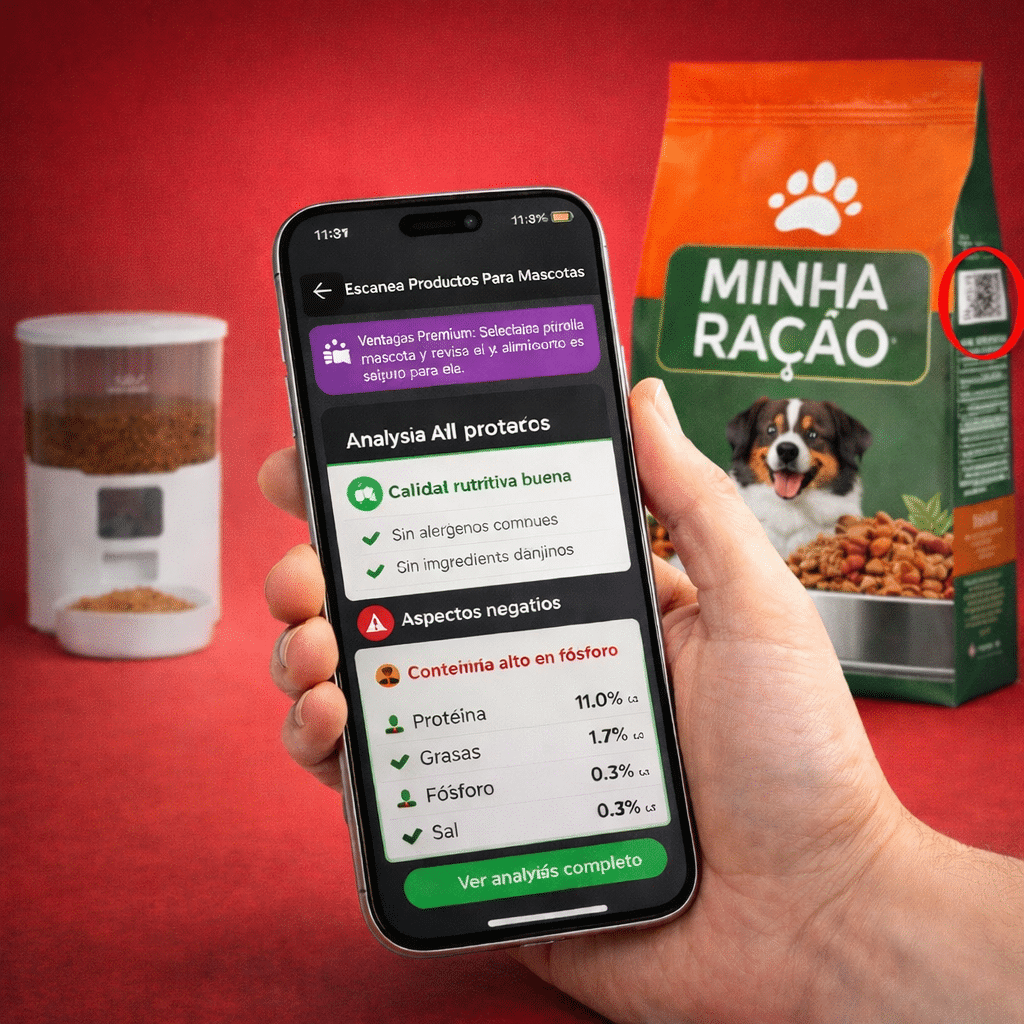
Modern scanning technology transforms this experience entirely. By simply pointing your smartphone at a barcode, you can access comprehensive nutritional databases that reveal what’s truly inside the bag.
These advanced applications connect to constantly updated databases containing detailed information about thousands of pet food products. The data includes not just what’s listed on the label, but independent analysis and quality ratings.
Within seconds, you receive clear, actionable information about whether the product meets your pet’s specific nutritional needs. This empowers you to make informed decisions right there in the store aisle.

Real-Time Nutritional Analysis
Scanner apps don’t just repeat what’s on the packaging. They provide context, comparisons, and expert interpretations that help you understand the true nutritional value of each formula.
You’ll discover whether the protein sources are high-quality animal proteins or plant-based fillers. You’ll learn about the presence of artificial additives, preservatives, or controversial ingredients that might affect your pet’s health.
The technology also considers your pet’s specific needs based on age, breed, size, and health conditions. A food that’s excellent for an active young dog might be completely inappropriate for a senior cat with kidney issues.
🐾 The Nutrient Gap Nobody Talks About
Even premium pet foods can have unexpected nutritional gaps. Manufacturing processes, ingredient sourcing variations, and storage conditions all affect the final nutrient content that reaches your pet’s bowl.
Vitamins can degrade during processing and storage. Essential fatty acids become rancid when exposed to heat and light. Minerals might be present but in forms that your pet’s body cannot efficiently absorb.
The crude protein percentage on a label doesn’t distinguish between complete proteins with all essential amino acids and incomplete proteins that provide limited nutritional value.
Digestibility is another crucial factor rarely discussed on packaging. A food might contain 30% protein, but if only 60% is digestible, your pet only benefits from 18% actual protein.
Bioavailability Matters More Than Quantity
Two foods can have identical guaranteed analysis numbers yet provide vastly different nutritional benefits. The difference lies in bioavailability – how much of each nutrient your pet’s body can actually use.
Premium animal proteins have higher bioavailability than plant proteins or meat by-products. Chelated minerals are more easily absorbed than inorganic mineral salts. These distinctions rarely appear on labels but significantly impact your pet’s health.
🎯 What Your Pet Actually Needs
Dogs and cats have evolved with specific nutritional requirements that differ significantly from human dietary needs. Understanding these requirements is essential for evaluating any pet food product.
Cats are obligate carnivores, meaning they require nutrients found primarily in animal tissues. They need taurine, arachidonic acid, and preformed vitamin A – nutrients they cannot synthesize adequately from plant sources.
Dogs are more omnivorous but still thrive on diets rich in quality animal proteins. They need proper ratios of calcium to phosphorus, balanced omega-3 and omega-6 fatty acids, and adequate levels of specific amino acids.
Life stage dramatically affects nutritional needs. Growing puppies require different nutrient ratios than adult dogs, and senior pets often need modified protein and calorie levels.
Breed-Specific Considerations
Large breed puppies need carefully controlled calcium and energy levels to support healthy bone growth without causing developmental orthopedic diseases. Small breeds have faster metabolisms and may require more calorie-dense foods.
Certain breeds are predisposed to specific health conditions that diet can influence. Dalmatians benefit from low-purine diets, while breeds prone to heart issues may need enhanced taurine and L-carnitine.
🔬 The Science Behind Pet Food Scanning
Pet food scanning applications utilize extensive databases compiled from multiple sources including manufacturer specifications, independent laboratory analyses, and nutritional research studies.
These databases are continuously updated as new products enter the market and as additional testing reveals more information about existing formulas. The technology cross-references multiple data points to provide accurate assessments.
Advanced algorithms evaluate not just individual nutrients but their interactions and ratios. The calcium-to-phosphorus ratio, for example, is just as important as the absolute amounts of each mineral.
Machine learning capabilities allow these systems to improve over time, recognizing patterns in ingredient quality and identifying potential red flags that might concern specific pets.
Beyond Basic Nutrition Facts
The best scanning apps provide information about ingredient sourcing, manufacturing practices, and recall histories. You’ll know if a brand has had quality control issues or if their ingredients come from questionable suppliers.
Some applications include community features where pet owners share their experiences with specific foods. Real-world feedback about palatability, digestive tolerance, and long-term health effects adds valuable context to the technical data.
🛡️ Protecting Your Pet From Marketing Deceptions
The pet food industry spends billions on marketing designed to appeal to human emotions rather than pet nutritional needs. Packaging featuring pastoral farm scenes might contain ingredients from industrial facilities.
Terms like “human-grade,” “premium,” and “veterinarian recommended” sound impressive but often lack standardized definitions. A scanner app cuts through this marketing noise to reveal objective nutritional information.
Price doesn’t always correlate with quality. Some expensive boutique brands offer no nutritional advantage over moderately priced alternatives, while some budget foods contain surprisingly problematic ingredients.
By comparing the actual nutrient profiles and ingredient quality rather than marketing claims and price points, you make decisions based on what truly matters for your pet’s health.
Identifying Red Flag Ingredients
Certain ingredients raise concerns among veterinary nutritionists. BHA and BHT are controversial preservatives linked to potential health issues. Artificial colors serve no nutritional purpose and may cause sensitivities in some pets.
Excessive carbohydrate content from grains or legumes can contribute to obesity and blood sugar fluctuations. Generic terms like “meat meal” or “animal fat” lack transparency about specific protein sources.
Scanner applications flag these concerning ingredients and explain why they might be problematic for your specific pet. You receive education while shopping, making you a more informed consumer with every scan.
📊 Making Sense of Nutritional Comparisons
Comparing pet foods accurately requires converting guaranteed analysis percentages to a dry matter basis since moisture content varies significantly between wet and dry foods.
A canned food might show 8% protein while a dry food shows 26%, but when moisture is removed from the equation, they might be nutritionally similar. Scanner apps perform these calculations instantly.
The technology also considers caloric density, showing you how much of each nutrient your pet receives per calorie consumed. This matters more than percentages alone, especially for weight management.
You can compare foods across different brands, formulas, and even formats to find the best nutritional value for your budget and your pet’s specific requirements.
🌟 Real Stories of Transformation
Pet owners who start using scanning technology often discover their “premium” food wasn’t as nutritious as they believed. One family found their dog’s chronic digestive issues resolved after switching to a food with genuinely higher-quality protein sources.
Another pet parent discovered their cat’s dry, flaky skin improved dramatically after the scanner revealed their previous food contained inadequate omega fatty acids despite marketing claims about “complete nutrition.”
These aren’t isolated incidents. When pets receive genuinely optimal nutrition, owners notice improvements in energy levels, coat condition, digestive health, and overall vitality.
The scanner empowers you to be your pet’s health advocate, making decisions based on science and verified information rather than advertising promises.
🚀 Taking Control of Your Pet’s Nutrition Today
The days of blindly trusting pet food packaging are over. With scanning technology in your pocket, you have instant access to the truth about any product you’re considering.
This transparency benefits not just your individual pet but the entire industry. As more consumers demand accurate information and genuine quality, manufacturers are incentivized to improve their products and be more honest about ingredients.
Your pet depends on you for every aspect of their care. Nutrition forms the foundation of their health, affecting everything from immune function to longevity. You owe it to them to make the most informed choices possible.
Technology has finally caught up with the love you have for your pet. By scanning before you buy, you ensure every meal contributes to a longer, healthier, happier life together.
💪 Empowering Every Pet Parent
You don’t need a veterinary degree to make excellent nutritional choices for your pet anymore. The scanner democratizes expert knowledge, putting professional-level information into every pet owner’s hands.
This tool works equally well whether you’re shopping at a specialty pet boutique or a big-box retailer. Wherever pet food is sold, you can verify its quality instantly.
The peace of mind that comes from knowing exactly what you’re feeding your beloved companion is invaluable. No more second-guessing, no more wondering if you’re making the right choice.
Your pet gives you unconditional love every single day. They greet you with enthusiasm, comfort you when you’re down, and ask for so little in return. Ensuring their food truly supports their health is one of the most important ways you can show your love back.
The scanner isn’t just an app—it’s your partner in providing the exceptional care your pet deserves. It transforms confusion into clarity and guesswork into confidence. Because when you truly love your pet, you ensure every bowl contains exactly what they need to thrive. 🐕🐈

Toni Santos is a visionary artisan and conceptual designer who channels the beauty of living organisms into structural expression. At Zureste, Toni explores the intricate elegance of insect anatomy, organic flow, and bioinspired design to create art that feels both natural and otherworldly.
Each creation Toni brings to life reflects a harmonic tension between structure and softness, wildness and control — echoing the complex intelligence found in the natural world. From beetle-like silhouettes to root-shaped contours, his work blurs the lines between biology, sculpture, and modern art.
Guided by fascination for metamorphosis, evolution, and pattern in nature, Toni’s pieces embody transformation. His BioLight Collection and conceptual series like Insect Type and Structure Aesthetics offer viewers more than aesthetic value — they present immersive experiences of living design.
As the creative force behind Zureste, Toni invites us to rethink beauty, architecture, and identity through a new lens — one shaped by wings, bones, spirals, and the microscopic poetry of the organic.
His creations reflect:
-
Design deeply rooted in the geometry of life
-
Inspiration from insects, roots, and the unseen natural order
-
A blend of science, spirituality, and visual storytelling
Whether you’re a lover of strange beauty, an admirer of evolution’s artistry, or a creative mind seeking something different, Toni welcomes you into a world where living forms become meaning, and surreal becomes sublime.