
Anúncios
# HTML Article:


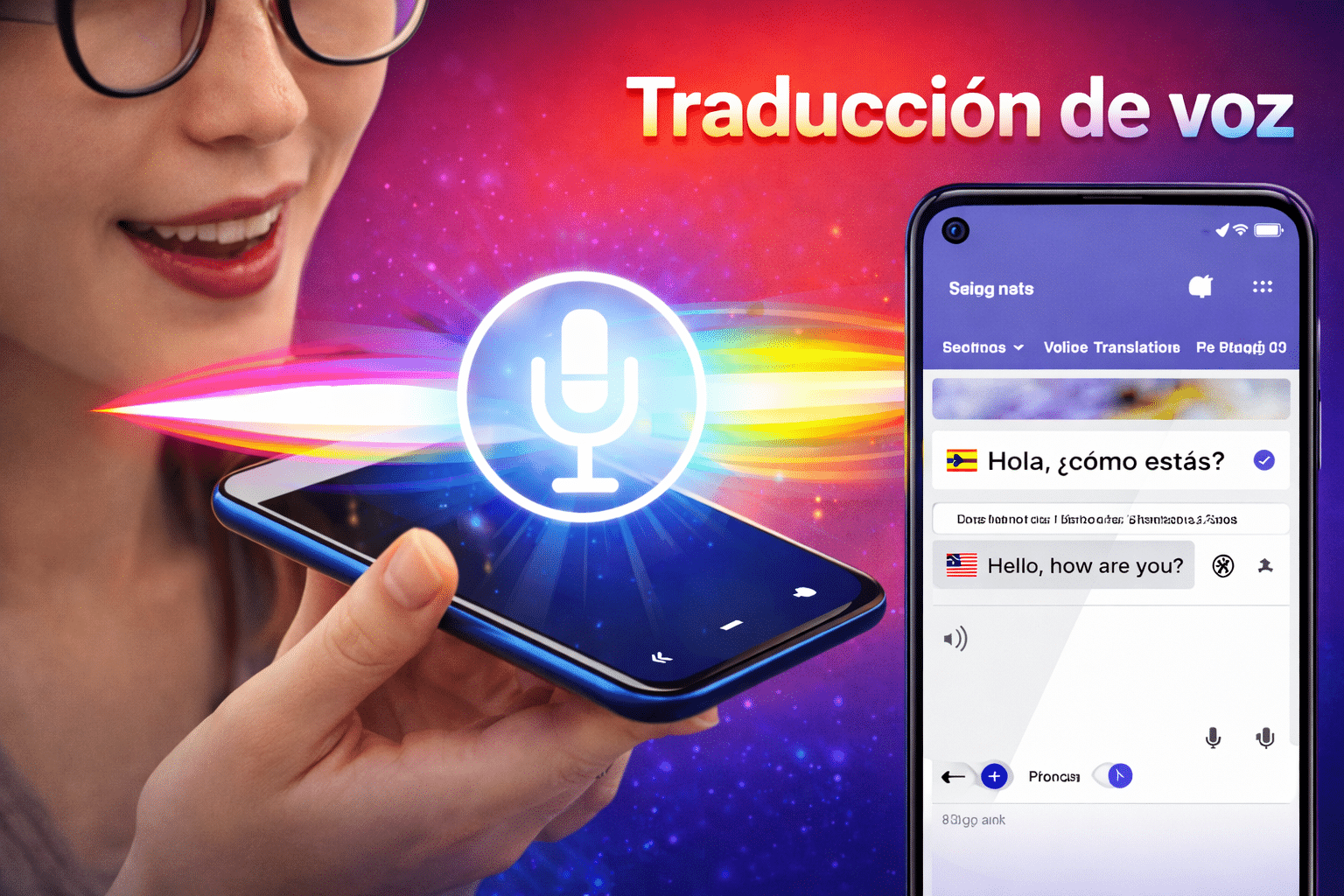
Traveling the world or simply needing to communicate across language barriers has never been easier thanks to voice translator apps on your smartphone—speak, and it translates instantly.Imagine yourself standing in a bustling market in Marrakech, trying to negotiate the price of a beautiful handwoven rug, or asking for directions in Tokyo’s vibrant streets. Language barriers can turn these exciting moments into frustrating experiences.
Anúncios
But what if you could simply speak into your phone and have your words translated instantly into any language? That’s the power of modern voice translator apps.
These remarkable tools have transformed how we interact with the world around us. Whether you’re a passionate traveler exploring new cultures, a business professional attending international conferences, or someone who occasionally needs to communicate with people who speak different languages, voice translators are becoming essential companions in our increasingly connected world.
Anúncios
🌍 Why Voice Translators Are Changing Global Communication
Gone are the days when you needed to carry bulky phrasebooks or rely on hand gestures to make yourself understood. Voice translator technology has evolved dramatically over the past few years, leveraging artificial intelligence and machine learning to deliver remarkably accurate real-time translations.
The beauty of these applications lies in their simplicity. You speak naturally into your phone, and within seconds, your message is translated and spoken aloud in your target language. The person you’re communicating with can respond in their native tongue, and the app translates their reply back to you. It’s like having a professional interpreter in your pocket, available 24/7 without the hefty price tag.
Modern voice translators support dozens—sometimes over 100—languages, covering the vast majority of communication needs worldwide. From widely spoken languages like Spanish, Mandarin, and French to less common ones like Swahili, Icelandic, or Thai, these apps bridge communication gaps that once seemed insurmountable.
✈️ Perfect Companions for Every Type of Traveler
If you’re someone who loves exploring new destinations, voice translators become invaluable travel companions. They empower you to venture beyond tourist hotspots where English might be commonly spoken and dive deeper into authentic local experiences.
🗣️ Real Conversations with Locals
One of the greatest joys of traveling is connecting with local people and learning about their lives, traditions, and perspectives. Voice translator apps enable these meaningful interactions. You can chat with the elderly shopkeeper who’s been running her family business for decades, ask a local farmer about his produce at the market, or share stories with fellow passengers on a long train journey.
These conversations often lead to unexpected discoveries—a hidden restaurant known only to residents, a festival happening in a nearby village, or an invitation to a family gathering. Without the ability to communicate, these enriching experiences would remain out of reach.
🏨 Navigating Essential Travel Situations
Beyond cultural exchanges, voice translators prove indispensable for practical travel needs. Checking into hotels, ordering food at restaurants, asking for directions, purchasing train tickets, or seeking help in emergencies becomes straightforward when you can communicate clearly.
Medical situations particularly benefit from translation technology. Being able to describe symptoms to a doctor or understand medication instructions in a foreign country can be crucial. While nothing replaces professional medical interpreters in serious situations, voice translators provide essential communication capabilities when immediate help is needed.
💼 Professional Applications Beyond Tourism
Voice translation technology isn’t just for travelers. Professionals across various industries are discovering how these tools enhance their work capabilities and expand their opportunities.
📊 International Business Made Accessible
Small business owners and entrepreneurs can now connect with international suppliers, negotiate deals with overseas partners, or attend virtual conferences featuring speakers from different countries. Voice translators democratize global commerce, allowing businesses of all sizes to operate internationally without requiring multilingual staff.
During video calls or in-person meetings, these apps can facilitate communication when professional interpreters aren’t available or budget constraints exist. While they don’t replace human translators for legal contracts or highly technical discussions, they enable day-to-day international business communication effectively.
🎓 Educational Opportunities
Students studying abroad, researchers collaborating with international colleagues, or educators teaching diverse classrooms benefit tremendously from voice translation technology. Academic discussions, research interviews, and classroom interactions become possible across language barriers.
Language learners themselves use these tools as practice partners, checking their pronunciation, learning new vocabulary in context, and building confidence before real-world conversations.
📱 How Voice Translator Apps Actually Work
Understanding the technology behind these applications helps you use them more effectively and appreciate their capabilities and limitations.
🤖 The Power of AI and Machine Learning
Modern voice translators use sophisticated artificial intelligence algorithms trained on massive datasets of translated text and speech. These systems learn patterns, context, idioms, and grammatical structures across languages, continuously improving their accuracy as more people use them.
When you speak into the app, several processes happen almost instantaneously. First, speech recognition technology converts your spoken words into text. Then, neural machine translation analyzes this text and translates it into the target language. Finally, text-to-speech synthesis generates natural-sounding audio in that language.
This entire process, which sounds incredibly complex, typically takes just one to three seconds—fast enough for natural conversation flow.
📶 Online vs. Offline Capabilities
Most voice translator apps work best with internet connectivity, as they access cloud-based processing power and updated language models. However, many applications now offer downloadable language packs for offline use—essential when traveling to areas with limited internet access or to avoid expensive roaming charges.
Offline translation generally supports slightly fewer languages and may have reduced accuracy compared to online mode, but the difference has narrowed considerably. For essential travel communication, offline capabilities provide reliable backup when connectivity isn’t available.
🎯 Choosing the Right Voice Translator for Your Needs
With numerous voice translator apps available, selecting the right one depends on your specific requirements and usage patterns.
🔍 Key Features to Consider
Language coverage is obviously crucial—ensure the app supports all languages you’ll need. But beyond that, consider translation accuracy, speech recognition quality, conversation mode capabilities, offline functionality, user interface design, and additional features like camera translation for signs and menus.
Some apps specialize in particular regions or language families, offering superior performance for those specific languages. Others provide broader coverage with reasonable quality across many languages.
💰 Free vs. Premium Options
Many excellent voice translator apps offer free versions with generous capabilities, supported by occasional advertisements. Premium subscriptions typically remove ads, unlock additional languages, provide unlimited translations, enable advanced features, and offer priority access to new capabilities.
For occasional travelers, free versions often suffice. Frequent international travelers or professionals relying on translation daily usually find premium subscriptions worthwhile for the enhanced experience and reliability.
🛠️ Tips for Getting the Best Translation Results
While voice translator technology is impressive, using it effectively requires understanding how to optimize your communication for accurate results.
🎤 Speaking for Optimal Recognition
Speak clearly and at a moderate pace—not too fast, but not unnaturally slow either. Pause briefly between sentences to give the app time to process. Avoid background noise when possible, as it can interfere with speech recognition accuracy.
Use complete sentences rather than fragments when possible. Translation algorithms work better with contextual information. Avoid idioms, slang, or culturally specific references that don’t translate well across languages.
✅ Verifying Important Information
For critical communications—addresses, numbers, dates, medical information—consider verifying through multiple methods. Have the translated text shown visually, ask the other person to confirm understanding, or translate back to your language to ensure accuracy.
Remember that voice translators, while excellent, aren’t perfect. Small errors can occur, especially with complex grammar, technical terminology, or accents. Maintaining patience and good humor during communication helps overcome occasional misunderstandings.
🌟 Real-World Success Stories
Countless travelers and professionals share stories of how voice translator apps transformed their experiences, turning potential disasters into memorable moments.
One traveler recounts getting lost in rural Vietnam and using a voice translator to ask farmers for directions, eventually being personally guided to her destination and invited for tea. A small business owner describes closing her first international deal with a Japanese supplier entirely through voice translation during video calls. A retiree traveling solo through South America credits his translator app with enabling him to navigate complex bus systems, make friends in local cafes, and feel confident exploring independently.
These stories highlight not just the practical utility of translation technology, but how it builds bridges between cultures, creates opportunities for connection, and empowers people to step outside their comfort zones.
🚀 The Future of Voice Translation Technology
Translation technology continues evolving rapidly, with exciting developments on the horizon that will make communication even more seamless.
🎧 Wearable Translation Devices
Smart earbuds with built-in translation capabilities are emerging, allowing natural conversations where each person speaks their language while hearing translations in real-time through their earpiece. This technology promises to make translated communication feel even more natural and less device-dependent.
🧠 Context-Aware Translation
Future translation systems will better understand context, tone, and cultural nuances, producing translations that capture not just literal meanings but intended emotions and subtleties. This advancement will significantly improve communication quality for complex or sensitive discussions.
Integration with augmented reality could overlay translations directly onto your visual field, translating signs, menus, and written text as you naturally look around your environment—creating truly immersive multilingual experiences.
🎒 Making Voice Translation Part of Your Travel Toolkit
Incorporating a voice translator app into your travel preparations and daily routines maximizes its benefits while minimizing potential frustrations.
📲 Pre-Trip Preparation
Before traveling, download your translator app and any offline language packs you’ll need. Practice using it in non-critical situations to familiarize yourself with the interface and capabilities. Test its performance with native speakers of your destination’s language if possible, or watch online videos demonstrating its accuracy.
Ensure your phone has adequate storage space, battery capacity, and a reliable case for protection during travels. Consider portable chargers or battery packs, as translation apps can drain batteries relatively quickly with continuous use.
🤝 Combining Technology with Cultural Respect
While voice translators enable communication, remember that technology complements but doesn’t replace cultural awareness and respect. Learn a few basic phrases in local languages—simple greetings, thank you, please, excuse me—showing effort and respect even while relying on your app for complex communication.
Be patient with people unfamiliar with translation technology. Some may find speaking into a phone strange initially. Explain what you’re doing, demonstrate how it works, and maintain friendly body language to put others at ease.
💡 Overcoming Common Challenges
Even the best voice translator apps face certain limitations and challenges that users should understand and prepare for.
🗣️ Accent and Dialect Variations
Standard versions of languages often translate more accurately than regional dialects or heavy accents. In areas with strong dialectical variations, you may occasionally encounter reduced accuracy. In these situations, asking speakers to use standard versions of their language, if possible, can improve results.
🔊 Environmental Factors
Noisy environments—busy markets, crowded restaurants, or street corners—can challenge speech recognition capabilities. When possible, move to quieter spaces for important conversations. Some apps offer noise cancellation features that help in challenging acoustic conditions.
⚡ Technical Limitations
Battery life, internet connectivity, and device performance can all impact translation capabilities. Always have backup communication strategies—written translation apps that work offline, printed phrasebooks, or even drawing and gesturing—for situations when technology fails.
🌈 Embracing a Multilingual World with Confidence
Voice translator apps represent more than convenient technology—they embody the possibility of a world where language barriers no longer limit human connection, opportunity, or understanding.
For travelers, they transform foreign destinations from intimidating places requiring constant guidance to accessible spaces where independence and exploration flourish. For professionals, they open markets and partnerships previously unreachable without expensive translation services. For everyday interactions in increasingly multicultural societies, they enable neighbors, colleagues, and community members to communicate despite speaking different native languages.
The confidence that comes from knowing you can communicate anywhere, anytime, fundamentally changes how you approach the world. Spontaneity becomes possible—you can accept last-minute invitations, ask unexpected questions, or help strangers without worrying about language barriers.
🎯 Taking Your First Steps with Voice Translation
If you haven’t yet explored voice translator apps, there’s never been a better time to start. Download a reputable application today and experiment with it in low-pressure situations. Translate conversations with multilingual friends, practice ordering in ethnic restaurants, or simply explore its capabilities at home.
As you become comfortable with the technology, you’ll discover countless situations where it proves valuable—from understanding foreign films without subtitles to helping tourists in your own city find their way.
The world is vast, diverse, and filled with people whose stories, knowledge, and perspectives enrich our lives. Language differences have historically limited these exchanges, but modern technology is rapidly dissolving these barriers. Voice translator apps put this powerful capability directly in your pocket, ready whenever you need it.
Whether you’re planning your next international adventure, building a global business, or simply want to connect with the diverse world around you, voice translation technology empowers you to communicate confidently across languages. Don’t let language barriers hold you back—embrace these tools and discover how much richer your experiences become when you can truly communicate with anyone, anywhere.
The future of communication is multilingual, accessible, and already available in your smartphone. All that remains is taking that first step, speaking into your device, and watching as technology bridges the gap between languages, cultures, and people. The world is waiting to have a conversation with you—in whatever language you choose. 🌏✨

Toni Santos is a visionary artisan and conceptual designer who channels the beauty of living organisms into structural expression. At Zureste, Toni explores the intricate elegance of insect anatomy, organic flow, and bioinspired design to create art that feels both natural and otherworldly.
Each creation Toni brings to life reflects a harmonic tension between structure and softness, wildness and control — echoing the complex intelligence found in the natural world. From beetle-like silhouettes to root-shaped contours, his work blurs the lines between biology, sculpture, and modern art.
Guided by fascination for metamorphosis, evolution, and pattern in nature, Toni’s pieces embody transformation. His BioLight Collection and conceptual series like Insect Type and Structure Aesthetics offer viewers more than aesthetic value — they present immersive experiences of living design.
As the creative force behind Zureste, Toni invites us to rethink beauty, architecture, and identity through a new lens — one shaped by wings, bones, spirals, and the microscopic poetry of the organic.
His creations reflect:
-
Design deeply rooted in the geometry of life
-
Inspiration from insects, roots, and the unseen natural order
-
A blend of science, spirituality, and visual storytelling
Whether you’re a lover of strange beauty, an admirer of evolution’s artistry, or a creative mind seeking something different, Toni welcomes you into a world where living forms become meaning, and surreal becomes sublime.