
Anúncios
Training your pet at home doesn’t have to be frustrating or complicated. With the right techniques and a little patience, you can transform your stubborn companion into a well-behaved family member starting today.


Many pet owners struggle with behavioral issues that seem impossible to fix. From excessive barking to jumping on guests, these problems can strain the bond between you and your furry friend. The good news is that most behavioral challenges can be corrected with consistent training methods applied in the comfort of your own home.
Anúncios
Whether you have a playful puppy or an older dog with ingrained habits, understanding how pets learn and applying proven training techniques will help you establish clear communication. This comprehensive guide will walk you through practical strategies that professional trainers use, adapted for everyday pet owners who want real results without expensive classes.
🐾 Understanding Your Pet’s Learning Process
Before diving into specific techniques, it’s essential to understand how your pet’s mind works. Dogs and cats learn through association, repetition, and consequences. They don’t understand human language the way we do, but they’re incredibly skilled at reading body language, tone of voice, and patterns.
Anúncios
Positive reinforcement forms the foundation of modern pet training. This approach rewards desired behaviors rather than punishing unwanted ones. When your pet associates a specific action with something pleasant—like treats, praise, or playtime—they’re more likely to repeat that behavior in the future.
Timing is everything in pet training. Your pet needs to receive feedback within seconds of performing a behavior to make the connection. A reward given five minutes after the action won’t be associated with what you’re trying to reinforce. This is why consistency and attentiveness during training sessions are crucial.
🎯 Setting Up Your Home Training Environment
Creating the right environment significantly impacts training success. Start by choosing a quiet space with minimal distractions where your pet can focus on you. As your pet masters basic commands, gradually introduce more challenging environments with additional stimuli.
Keep training supplies easily accessible. You’ll need high-value treats that your pet absolutely loves, a clicker if you choose to use one, and any props specific to the behaviors you’re teaching. Store these items in a designated spot so you can take advantage of spontaneous training moments throughout the day.
Remove potential hazards and temptations from your training area. If you’re working on “stay” commands, don’t practice near their favorite toy. If you’re addressing jumping behavior, ensure other family members won’t accidentally encourage the unwanted action during training sessions.
✨ Essential Commands Every Pet Should Know
Mastering basic commands provides the framework for all future training. These fundamental skills improve safety, strengthen your bond, and make daily life more enjoyable for both you and your pet.
The “Sit” Command
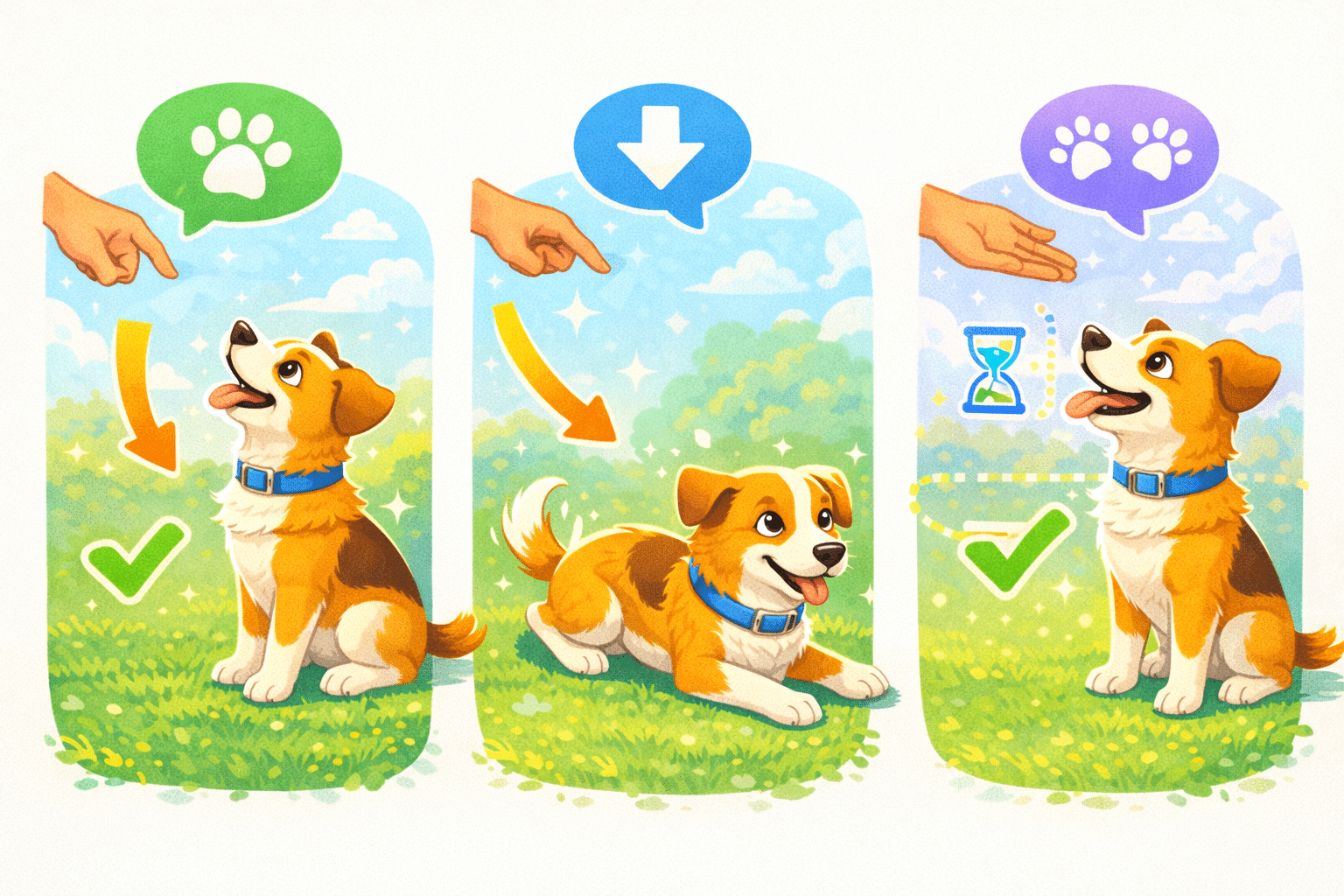
Sit is typically the first command taught because it’s relatively easy for pets to understand and provides a foundation for other behaviors. Hold a treat close to your pet’s nose, then slowly move it upward. As their head follows the treat, their bottom will naturally lower to the ground. The moment they sit, say “sit,” give the treat, and offer enthusiastic praise.
Practice this command multiple times daily in short sessions lasting five to ten minutes. Once your pet reliably sits with the treat lure, begin incorporating the verbal command before the hand motion. Eventually, phase out the treat lure while continuing to reward with treats intermittently.
The “Stay” Command
Stay teaches impulse control and patience. Start with your pet in a sitting position. Hold your palm out in front of them and say “stay.” Take one step backward. If they remain in place for just a second, immediately return and reward them. Gradually increase the duration and distance over multiple training sessions.
Many pets struggle with stay because it requires them to resist their natural impulse to follow you. Be patient and increase difficulty slowly. If your pet breaks the stay consistently, you’re progressing too quickly and need to return to an easier level.
The “Come” Command
A reliable recall can literally save your pet’s life. Begin practicing indoors with minimal distractions. Say your pet’s name followed by “come” in an enthusiastic, welcoming tone. When they come to you, reward them generously with treats and affection. Never call your pet to you for something unpleasant like punishment or ending playtime.

🚫 Addressing Common Behavioral Problems
Beyond basic obedience, many pet owners face specific behavioral challenges that disrupt household harmony. These issues often stem from boredom, anxiety, lack of boundaries, or insufficient exercise. Addressing the root cause while implementing targeted training strategies produces the best results.
Excessive Barking Solutions
Barking serves as natural communication for dogs, but excessive barking becomes problematic. Identify what triggers the barking—whether it’s boredom, territorial behavior, attention-seeking, or anxiety. Each cause requires a different approach.
For attention-seeking barking, completely ignore your pet when they bark and immediately reward them during quiet moments. This teaches that silence, not noise, earns your attention. For territorial barking, work on desensitization by gradually exposing your pet to triggers at a distance where they remain calm, then slowly decreasing that distance over time.
Jumping on People
Pets jump because it works—they get attention, even if it’s negative. To eliminate jumping, consistently turn away and ignore your pet whenever they jump. Only give attention when all four paws are on the ground. Ask visitors to follow the same protocol for consistent results.
Teach an incompatible behavior like “sit” as an alternative. When guests arrive, ask your pet to sit before receiving greetings. Reward them for maintaining the sit position during interactions. This gives them a clear expectation of how to politely greet people.
Destructive Chewing Behavior
Chewing satisfies natural instincts, especially in puppies. Rather than trying to eliminate chewing entirely, redirect it to appropriate items. Provide a variety of safe chew toys with different textures. When you catch your pet chewing something inappropriate, calmly take it away and immediately offer an acceptable alternative.
Prevent access to forbidden items by pet-proofing your space. Use bitter apple spray on furniture legs and other tempting objects. Ensure your pet receives adequate physical exercise and mental stimulation, as tired pets are less likely to engage in destructive behaviors out of boredom.
⏰ Creating an Effective Training Schedule
Consistency transforms sporadic attempts into lasting behavioral changes. Establish a daily training routine that fits naturally into your lifestyle. Short, frequent sessions work better than occasional marathon training periods.
Aim for three to five training sessions daily, each lasting five to ten minutes. Morning sessions when your pet is fresh and alert often produce excellent results. Before meal times can be ideal since treats hold higher value for a hungry pet.
Incorporate training into everyday activities. Practice “sit” before placing the food bowl down. Work on “stay” before opening the door. Reinforce “come” when calling your pet from another room. These micro-training moments add up to significant progress without requiring dedicated time blocks.
🎁 Choosing and Using Rewards Effectively
Not all rewards carry equal weight for your pet. Discover what motivates your individual companion—some pets work enthusiastically for food, others prefer toys, and some crave verbal praise and physical affection above all else.
For food rewards, use small, soft treats that your pet can quickly consume without breaking focus. Reserve the highest-value treats (like small pieces of chicken or cheese) for challenging behaviors or distracting environments. This maintains strong motivation even when training becomes more difficult.
Vary your rewards to prevent predictability. Sometimes give a treat, other times offer enthusiastic praise, occasionally produce a favorite toy. This variable reinforcement schedule keeps your pet engaged and working hard because they never know exactly what wonderful thing might happen when they obey.
💡 Advanced Training Tips for Stubborn Pets
Some pets present greater training challenges due to temperament, age, or previous experiences. These individuals require extra patience and modified approaches, but they absolutely can learn with the right techniques.
Break complex behaviors into smaller steps. If your pet struggles with “stay” at a distance, master staying for three seconds, then five seconds, then ten seconds before adding distance. Celebrate each small victory rather than fixating on the end goal.
If a particular approach isn’t working after several consistent attempts, change your strategy. Try different rewards, adjust your timing, modify the environment, or break the behavior into even smaller components. What works for one pet might not work for another.
Consider your pet’s individual personality. Anxious pets need extra reassurance and gentler training methods. High-energy pets benefit from incorporating movement and play into training. Independent breeds may require higher-value rewards to maintain motivation.
🔄 Maintaining Training Results Long-Term
Achieving initial success is exciting, but maintaining those results requires ongoing effort. Pets naturally test boundaries and may regress if reinforcement stops completely once they’ve learned a behavior.
Continue practicing learned commands regularly, even after your pet has mastered them. Random reinforcement—rewarding correct responses unpredictably rather than every single time—creates the strongest, most lasting behavioral patterns.
When regression occurs, return to basics rather than becoming frustrated. Life changes like moving, adding a new family member, or changes in routine can temporarily disrupt training. Simply revisit earlier training steps until your pet regains confidence and consistency.
👨👩👧👦 Getting the Whole Family Involved
Training succeeds or fails based on consistency across all family members. If one person allows jumping while another discourages it, your pet receives mixed messages that slow progress significantly.
Hold a family meeting to establish house rules and training protocols everyone will follow. Decide which commands you’ll use and how you’ll deliver them. Demonstrate proper technique so everyone rewards behaviors at the correct moment and uses consistent hand signals.
Assign age-appropriate training responsibilities to children. Younger kids can help with treat distribution under supervision, while older children can lead short training sessions. This involvement teaches responsibility while strengthening the bond between kids and pets.
📱 Leveraging Technology and Training Resources
Modern pet owners have access to incredible tools that previous generations never enjoyed. Training apps provide structured lesson plans, video demonstrations, and progress tracking features that keep you accountable and organized.
Video recording your training sessions offers valuable insights. You can review your timing, body language, and tone to identify areas for improvement. Watching your pet’s responses helps you understand their learning patterns and adjust your approach accordingly.
Online communities and forums connect you with experienced trainers and fellow pet owners facing similar challenges. These resources provide encouragement, troubleshooting advice, and creative solutions you might not have considered independently.
🌟 Celebrating Progress and Building Confidence
Training transforms both you and your pet. As you work together, you’ll develop deeper understanding and stronger communication. Your pet gains confidence as they master new skills and understand expectations more clearly.
Document your journey with photos and videos. Comparing your pet’s behavior now to when you started reveals progress that feels gradual day-to-day but is actually quite dramatic over weeks and months.
Remember that every pet learns at their own pace. Avoid comparing your progress to others. Focus on the improvements in your specific relationship and celebrate each milestone, no matter how small it might seem.
🏆 Taking Your Training to the Next Level
Once your pet masters basics, consider expanding into trick training, agility exercises, or specialized skills. Advanced training provides continued mental stimulation that prevents boredom and strengthens your bond even further.
Tricks like rolling over, playing dead, or shaking paws aren’t just entertaining—they demonstrate that your pet can learn complex sequences and enjoys the mental challenge. Many pets who struggle with boredom-related behavioral problems improve dramatically when given regular opportunities to learn new skills.
The journey of training your pet at home is one of the most rewarding experiences of pet ownership. With patience, consistency, and the techniques outlined here, you can absolutely end the stubbornness and behavioral challenges that have been frustrating you. Start today with just one simple command, practice it consistently, and watch as your relationship with your pet transforms. The key isn’t perfection—it’s dedication to showing up every day and helping your companion become the best version of themselves. Your future self will thank you for the effort you invest now in creating a harmonious, joyful life together.

Toni Santos is a visionary artisan and conceptual designer who channels the beauty of living organisms into structural expression. At Zureste, Toni explores the intricate elegance of insect anatomy, organic flow, and bioinspired design to create art that feels both natural and otherworldly.
Each creation Toni brings to life reflects a harmonic tension between structure and softness, wildness and control — echoing the complex intelligence found in the natural world. From beetle-like silhouettes to root-shaped contours, his work blurs the lines between biology, sculpture, and modern art.
Guided by fascination for metamorphosis, evolution, and pattern in nature, Toni’s pieces embody transformation. His BioLight Collection and conceptual series like Insect Type and Structure Aesthetics offer viewers more than aesthetic value — they present immersive experiences of living design.
As the creative force behind Zureste, Toni invites us to rethink beauty, architecture, and identity through a new lens — one shaped by wings, bones, spirals, and the microscopic poetry of the organic.
His creations reflect:
-
Design deeply rooted in the geometry of life
-
Inspiration from insects, roots, and the unseen natural order
-
A blend of science, spirituality, and visual storytelling
Whether you’re a lover of strange beauty, an admirer of evolution’s artistry, or a creative mind seeking something different, Toni welcomes you into a world where living forms become meaning, and surreal becomes sublime.