Anúncios
Learning traffic signs isn’t just about passing your driving test—it’s about keeping yourself and others safe on the road every single day.

Every time you get behind the wheel, you enter a complex environment where split-second decisions can mean the difference between arriving safely and causing a catastrophic accident. Traffic signs serve as your constant guide through this landscape, communicating essential information that helps you navigate roads confidently and responsibly.
Anúncios
Unfortunately, many drivers view traffic sign knowledge as something they only need temporarily—just long enough to pass their exam. This mindset contributes to countless preventable accidents, traffic violations, and dangerous situations that put everyone at risk. Understanding road signs should be a lifelong commitment that evolves as you encounter new driving environments and challenges.
🚦 Why Traffic Sign Knowledge Goes Beyond Exam Day
When you’re preparing for your driving test, memorizing traffic signs feels like just another hurdle to clear. You might use flashcards, take practice tests, or download apps to help you remember what each sign means. But once you pass that exam, what happens to all that knowledge?
Anúncios
For too many drivers, traffic sign awareness fades into the background. They rely on habit and intuition rather than actively reading and responding to the visual language of the road. This complacency creates dangerous blind spots in their driving awareness.
Real-world driving presents scenarios your exam never covered. You’ll encounter temporary construction signs, regional variations in signage, weather-worn markers that are harder to read, and complex intersections where multiple signs provide layered information. Without a solid foundation in traffic sign comprehension, these situations become significantly more challenging and risky.
The Real-World Consequences of Ignoring Traffic Signs
Statistics paint a sobering picture of what happens when drivers fail to understand or obey traffic signs. Accidents at intersections—many involving drivers who missed or misinterpreted stop signs and yield signs—account for a significant percentage of all traffic collisions. Speed limit violations contribute to both accident severity and fatality rates, with drivers often claiming they didn’t notice the posted limits.
Beyond the immediate physical dangers, ignoring traffic signs carries legal and financial consequences. Traffic violations accumulate points on your license, increase your insurance premiums, and in severe cases, can result in license suspension or criminal charges. What seems like a minor oversight—missing a no-turn sign or ignoring a school zone marker—can fundamentally alter your life.
🧠 The Psychology Behind Traffic Sign Recognition and Memory
Understanding how your brain processes traffic signs can help you become a more effective learner and a safer driver. Traffic signs use specific shapes, colors, and symbols precisely because these elements trigger rapid cognitive recognition.
Red octagons instantly register as stop signs, even before you consciously read the word “STOP.” Yellow diamonds signal caution and warnings. Blue rectangles provide service information. This visual coding system works because it bypasses slower verbal processing and taps into immediate pattern recognition.
However, this system only works when you’ve properly trained your brain to recognize these patterns. First-time drivers or those operating vehicles in unfamiliar countries often experience cognitive overload because they haven’t yet developed automatic sign recognition. Every sign requires conscious effort to interpret, slowing reaction times and increasing stress.
Building Long-Term Traffic Sign Memory
Effective memorization requires more than passive review. Research in cognitive psychology shows that active engagement, contextual learning, and repeated exposure create stronger neural pathways and more reliable recall.
When studying traffic signs, don’t just look at static images. Visualize yourself encountering each sign while driving. What would you do? How would you respond? This mental rehearsal strengthens the connection between recognition and action, making your eventual response more automatic and reliable.
Spacing out your study sessions also improves retention. Rather than cramming all traffic sign knowledge into a few intense sessions before your exam, distribute your learning over weeks or months. Review signs regularly, even after you’ve passed your test. This spaced repetition transforms short-term memory into durable long-term knowledge.
📚 Categories of Traffic Signs Every Driver Must Master
Traffic signs fall into distinct categories, each serving specific purposes within the road communication system. Understanding these categories helps you organize your knowledge and predict what type of information different signs will provide.
Regulatory Signs: The Law in Visual Form
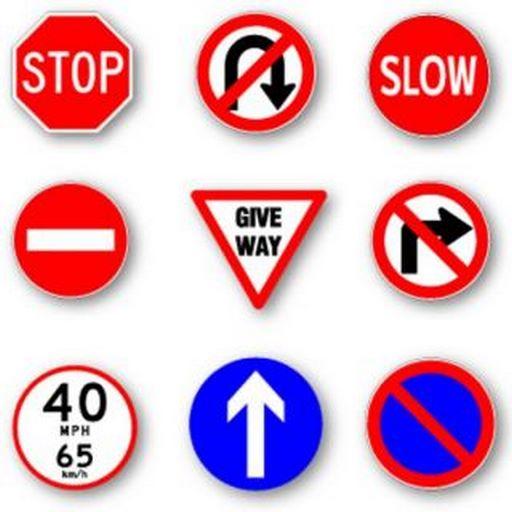
Regulatory signs tell you what you must or must not do. These include stop signs, yield signs, speed limit markers, no parking zones, one-way street indicators, and turn restrictions. Violating regulatory signs typically results in traffic citations because these signs carry the force of law.
Recognizing regulatory signs requires understanding not just what they mean, but the specific legal obligations they impose. A stop sign doesn’t mean “slow down if convenient”—it legally requires you to come to a complete halt, check for traffic and pedestrians, and only proceed when safe.
Warning Signs: Your Advance Notice System
Warning signs alert you to potential hazards ahead. These typically appear as yellow diamonds and include messages about curves, intersections, pedestrian crossings, animal crossings, slippery conditions, and road work zones. The key purpose of warning signs is giving you time to adjust your speed and attention before reaching the hazard.
Effective drivers don’t just acknowledge warning signs—they act on them. Seeing a curve warning sign should trigger a conscious check of your speed, a slight adjustment of your hand position on the wheel, and heightened attention to your lane position.
Guide Signs: Navigation and Information
Guide signs provide directional information, distance markers, and service locations. These include highway exit signs, route markers, mileage indicators, and signs pointing to gas stations, hospitals, and rest areas. While not directly related to immediate safety, guide signs prevent dangerous last-minute maneuvers caused by navigation confusion.
In our GPS-dependent era, some drivers ignore physical guide signs entirely. This creates problems when technology fails, signals are lost, or devices provide incorrect information. Maintaining the ability to navigate using traditional road signs provides important redundancy and situational awareness.
🌍 Navigating International Traffic Sign Variations
If you plan to drive internationally, understanding traffic sign variations becomes critically important. While many countries follow similar conventions established by international agreements like the Vienna Convention on Road Signs and Signals, significant regional differences exist.
European traffic signs tend to be more pictographic and less text-dependent than American signs. Asian countries may incorporate local languages alongside international symbols. Some nations use right-side driving while others use left-side, affecting the positioning and orientation of certain signs.
Before driving in any new country, invest time researching local traffic sign conventions. Many countries require international drivers to demonstrate traffic law knowledge before allowing them on the roads. Even where this isn’t legally required, self-education dramatically improves your safety and reduces stress.
💡 Practical Strategies for Lifelong Traffic Sign Mastery
Maintaining and expanding your traffic sign knowledge requires intentional practice. Here are evidence-based strategies that work for learners of all ages and experience levels.
Active Observation During Every Drive
Transform your regular driving into continuous learning opportunities. Make it a habit to mentally note and identify every traffic sign you encounter. If you see a sign you don’t immediately recognize, make a note to research it later. This active engagement reinforces existing knowledge and expands your vocabulary of road signs.
Passenger time also offers learning opportunities. When you’re not driving, pay attention to traffic signs and predict what they mean before reading accompanying text. This game-like approach keeps your skills sharp without requiring dedicated study time.
Using Technology for Enhanced Learning
Modern learning tools provide interactive, engaging ways to master traffic signs. Mobile apps offer quiz-based learning, augmented reality features that overlay sign information onto real-world images, and progress tracking that identifies your weak areas.
These digital tools excel at providing the repetition and varied contexts that strengthen memory. Unlike static textbooks, apps can randomize questions, adapt difficulty to your performance level, and provide immediate feedback that accelerates learning.
Teaching Others to Reinforce Your Knowledge
One of the most effective learning techniques involves teaching what you know to others. If you have teenage children preparing for their own driving tests, become their study partner. Explaining traffic sign meanings to someone else forces you to organize your knowledge clearly and identify any gaps in your understanding.
Even informal conversations about road safety with friends or family members provide opportunities to verbalize and reinforce your traffic sign knowledge. The social dimension of learning creates emotional connections that strengthen memory.
🚗 Special Situations That Demand Extra Traffic Sign Awareness
Certain driving contexts require heightened attention to traffic signage because the consequences of missing information are particularly severe.
Construction Zones and Temporary Signage
Construction zones use temporary signs that may differ in appearance from standard permanent signage. Orange diamonds and rectangular signs indicate work zones, where speed limits change, lanes shift, and workers operate near traffic. These zones see elevated accident rates because drivers fail to adjust their behavior appropriately.
When entering construction zones, reduce your speed even before reaching the posted reduced limit. Increase your following distance. Eliminate distractions completely. The combination of changed road conditions, unusual traffic patterns, and human workers near the roadway creates a high-risk environment where your margin for error shrinks dramatically.
School Zones and Pedestrian Areas
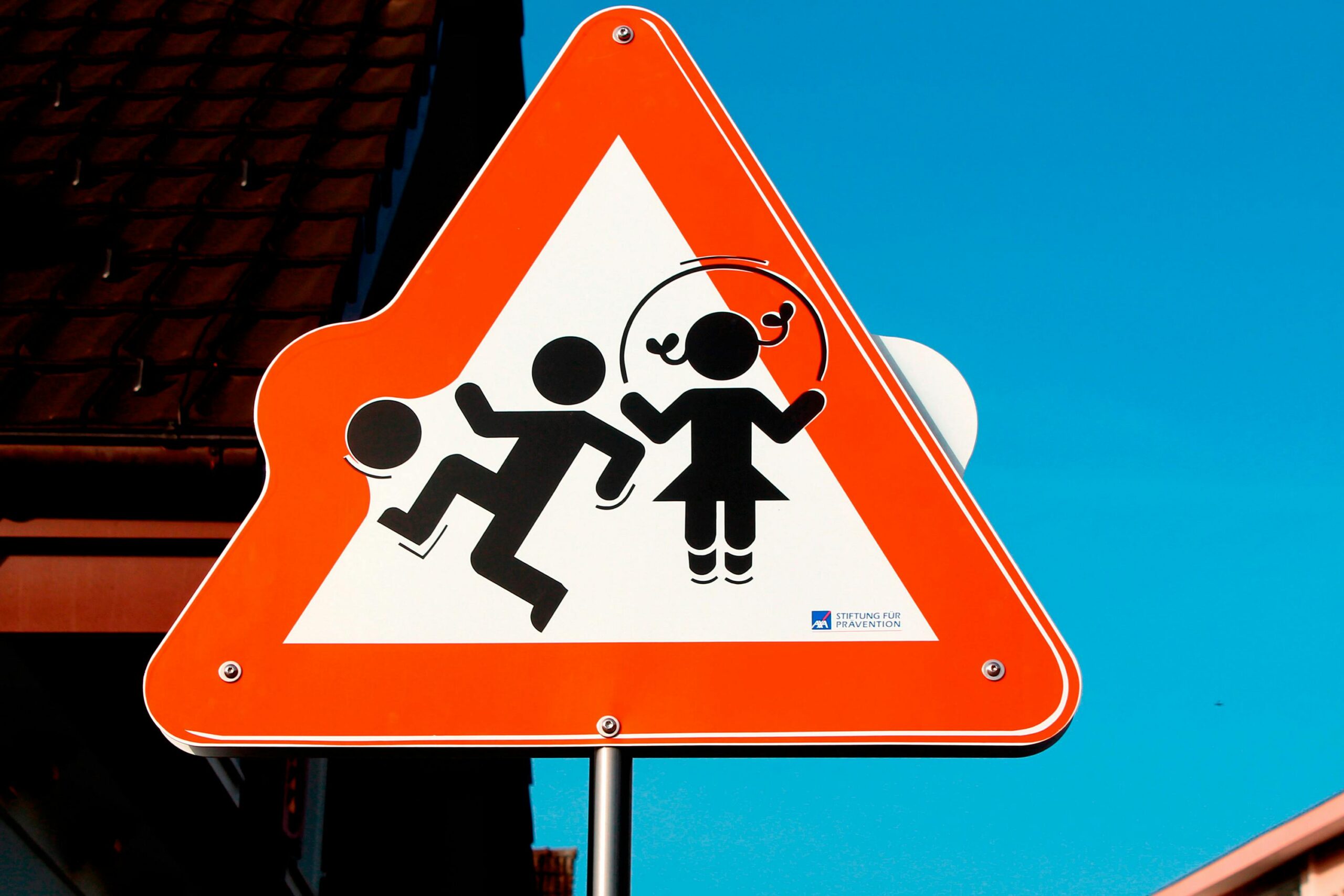
School zone signs activate during specific hours, creating temporary speed restrictions designed to protect children. Missing or ignoring these signs puts vulnerable pedestrians at risk and typically results in doubled fines and penalties.
Effective drivers recognize school zone markers and automatically heighten their alertness, scanning for children who may dart into the street. This protective awareness should extend beyond official school zones to any area where children congregate—parks, residential neighborhoods, and recreational facilities.
Highway and Interstate Driving
High-speed highway environments compress decision-making time. Exit signs provide sequential information—first announcing the exit miles in advance, then providing distance countdowns, and finally marking the actual exit location. Missing this sequence because you weren’t paying attention can lead to dangerous last-minute lane changes or missed exits followed by illegal reversing.
Highway driving requires you to process traffic sign information while traveling at speeds that limit your reaction time. Regular practice reading and responding to signs at highway speeds builds the automatic recognition patterns that keep you safe.
📖 Legal Implications of Traffic Sign Compliance
Traffic signs don’t merely suggest behavior—they communicate legally binding requirements. Understanding the legal framework surrounding traffic signage helps you appreciate why comprehensive knowledge matters.
When you violate a traffic sign, you’re not just breaking a rule; you’re violating laws that carry specific penalties. These range from monetary fines to license points, mandatory driving courses, increased insurance rates, and in serious cases, criminal charges.
Ignorance provides no legal defense. Courts consistently hold drivers responsible for understanding and obeying traffic signs. Claiming you didn’t see a sign or didn’t know what it meant doesn’t absolve you of liability when your violation causes an accident or endangers others.
Beyond legal penalties, traffic violations create permanent records that can affect employment opportunities, especially for positions requiring driving. Commercial driver’s license holders face particularly strict standards, where relatively minor violations can end careers.
🎯 Making Traffic Sign Knowledge Part of Your Driving Identity
The most effective drivers don’t view traffic sign comprehension as a separate skill—they integrate it into their core driving identity. Just as you automatically check mirrors, use turn signals, and monitor speed, reading and responding to traffic signs should become an automatic, unconscious aspect of your driving behavior.
This integration happens through consistent practice, mindful attention, and recognition that traffic signs represent a communication system designed to keep everyone safe. Every sign you encounter was placed deliberately by traffic engineers who analyzed accident data, traffic patterns, and safety needs.
Respecting this system means more than avoiding tickets. It means participating actively in the collective effort to make roads safer for everyone—drivers, passengers, pedestrians, and cyclists alike.
🔄 Continuing Education as Roads and Signs Evolve
Traffic sign systems aren’t static. New signs are introduced as traffic engineers identify safety needs. Existing signs are modified for improved visibility or clarity. Regional variations develop as different jurisdictions address local challenges.
Committed drivers stay informed about these changes. When you notice a new sign type, research its meaning rather than guessing. If your area introduces updated signage, take time to understand the new system. Professional drivers should consider periodic refresher courses that update their knowledge.
This attitude of continuous learning serves you throughout your driving life, helping you adapt to new environments, technologies, and traffic patterns. The driver who stops learning becomes progressively less safe as roads evolve around them.
✨ Transforming Obligation Into Opportunity
Shift your perspective on traffic sign knowledge from burdensome obligation to empowering opportunity. Every sign you understand makes you more confident, capable, and safe. Every moment you invest in learning traffic signs pays dividends in reduced stress, fewer violations, lower insurance costs, and most importantly, decreased accident risk.
The roads you travel connect you to work, family, recreation, and countless essential aspects of your life. Approaching these journeys with comprehensive traffic sign knowledge transforms driving from a source of anxiety into an activity you control with competence and confidence.
When you truly master traffic signs, you stop seeing them as restrictions and start recognizing them as the helpful guides they were designed to be. They’re not there to limit your freedom—they’re there to protect your safety and the safety of everyone sharing the road with you.
Make the commitment today to move beyond exam-level traffic sign knowledge. Embrace continuous learning, active observation, and genuine respect for the traffic sign system. Your future self—and everyone you encounter on the road—will benefit from this decision for years to come. 🚦

Toni Santos is a visionary artisan and conceptual designer who channels the beauty of living organisms into structural expression. At Zureste, Toni explores the intricate elegance of insect anatomy, organic flow, and bioinspired design to create art that feels both natural and otherworldly.
Each creation Toni brings to life reflects a harmonic tension between structure and softness, wildness and control — echoing the complex intelligence found in the natural world. From beetle-like silhouettes to root-shaped contours, his work blurs the lines between biology, sculpture, and modern art.
Guided by fascination for metamorphosis, evolution, and pattern in nature, Toni’s pieces embody transformation. His BioLight Collection and conceptual series like Insect Type and Structure Aesthetics offer viewers more than aesthetic value — they present immersive experiences of living design.
As the creative force behind Zureste, Toni invites us to rethink beauty, architecture, and identity through a new lens — one shaped by wings, bones, spirals, and the microscopic poetry of the organic.
His creations reflect:
-
Design deeply rooted in the geometry of life
-
Inspiration from insects, roots, and the unseen natural order
-
A blend of science, spirituality, and visual storytelling
Whether you’re a lover of strange beauty, an admirer of evolution’s artistry, or a creative mind seeking something different, Toni welcomes you into a world where living forms become meaning, and surreal becomes sublime.