
Anúncios
Wondering if you might be pregnant? Modern technology now offers apps that claim to help you track early pregnancy signs right from your smartphone. 📱
The possibility of pregnancy brings a whirlwind of emotions, from excitement to anxiety. In this digital age, countless women turn to their smartphones for answers, guidance, and support during this transformative time. Pregnancy tracking apps have evolved significantly, offering features that go far beyond simple calendar tracking.
Anúncios
While no app can replace a medical-grade pregnancy test or professional healthcare advice, these digital tools provide valuable resources for women who are trying to conceive, suspect they might be pregnant, or want to monitor their pregnancy journey. Let’s explore what these apps actually do and how they can support you during this important time.
📱 What Pregnancy Test Apps Actually Do
It’s crucial to understand that no smartphone app can directly detect pregnancy through your phone’s camera or sensors. The term “pregnancy test app” is somewhat misleading, as these applications don’t perform actual pregnancy testing in the medical sense.
Anúncios
Instead, these apps function as comprehensive tracking and information systems. They help you monitor menstrual cycles, identify fertile windows, track symptoms, and provide educational content about pregnancy signs and development. The technology relies on the data you input rather than any biological testing capability.
Think of these apps as your digital pregnancy companion rather than a replacement for traditional testing methods. They use algorithms to analyze patterns in your cycle, predict ovulation, and help you recognize early pregnancy symptoms based on medical knowledge and user data.
🔍 Core Features of Pregnancy Tracking Apps
Modern pregnancy apps typically offer a range of features designed to support women throughout their fertility and pregnancy journey. The most sophisticated applications combine cycle tracking with symptom monitoring and educational resources.
- Menstrual cycle tracking: Records your period dates, flow intensity, and cycle length to predict future periods and fertile windows
- Ovulation prediction: Uses your cycle data to identify your most fertile days for conception
- Symptom logging: Allows you to record physical symptoms like nausea, fatigue, mood changes, and breast tenderness
- Pregnancy symptom checker: Compares your symptoms against common early pregnancy indicators
- Daily pregnancy tips: Provides week-by-week information about fetal development and maternal changes
- Reminder system: Sends notifications for taking tests, doctor appointments, or prenatal vitamins
- Community support: Connects you with other women at similar stages of their journey
- Health data integration: Syncs with wearable devices to track sleep, activity levels, and heart rate
🩺 The Science Behind Digital Pregnancy Detection
Understanding how pregnancy actually occurs helps clarify what apps can and cannot do. Pregnancy begins when a fertilized egg implants in the uterine lining, typically 6-12 days after ovulation. This triggers the production of human chorionic gonadotropin (hCG), the hormone detected by pregnancy tests.
Traditional home pregnancy tests work by detecting hCG in urine, while blood tests at medical facilities can identify even smaller amounts of this hormone. No smartphone sensor technology currently exists that can detect hCG levels through non-invasive means like cameras or touchscreens.
What pregnancy apps excel at is pattern recognition and probability assessment. By tracking your cycle consistently over several months, these apps build a profile of your unique fertility patterns. When you log symptoms associated with early pregnancy, the app can compare these against known pregnancy indicators and provide probability assessments.
📊 How Apps Calculate Pregnancy Likelihood
The algorithms behind pregnancy apps analyze multiple data points to estimate the likelihood of pregnancy. These calculations are based on statistical models and medical research about early pregnancy symptoms and timing.
Key factors these apps consider include:
- Timing of unprotected intercourse relative to ovulation
- Regularity and length of your menstrual cycles
- Presence and timing of pregnancy symptoms
- Basal body temperature patterns (if tracked)
- Changes in cervical mucus consistency
- Previous pregnancy history and outcomes
✨ Popular Features Women Actually Use
Real-world usage patterns reveal which features provide the most value to women using pregnancy tracking apps. The most appreciated functionalities go beyond simple test reminders and offer genuine support throughout the conception and pregnancy journey.
The symptom tracker stands out as particularly valuable. Many women experience confusing physical changes in early pregnancy that mirror premenstrual symptoms. Having a structured way to log these changes helps identify patterns and provides reassurance that what you’re experiencing is normal.
Community features also rank highly among user preferences. The emotional roller coaster of trying to conceive or navigating early pregnancy can feel isolating. Anonymous forums and chat groups within these apps create spaces where women share experiences, ask questions, and support each other without judgment.
📅 Cycle Prediction and Fertility Windows
For women trying to conceive, accurate cycle tracking is invaluable. These apps use historical data to predict when ovulation is most likely to occur, identifying the fertile window when conception has the highest probability of success.
Advanced apps incorporate multiple fertility signs beyond calendar dates. Temperature tracking, cervical position monitoring, and ovulation predictor kit results can all be logged to create a more complete fertility picture. This multi-factor approach significantly improves prediction accuracy compared to simple date-based calculations.
🎯 When to Actually Take a Real Pregnancy Test
Apps can guide you toward the optimal timing for taking a physical pregnancy test, which is typically their most practical benefit. Testing too early often leads to false negatives because hCG levels haven’t risen sufficiently for detection.
Most pregnancy tests are designed to detect pregnancy from the first day of a missed period, roughly 14 days after ovulation. However, some sensitive tests can detect pregnancy a few days earlier. Your app can calculate these dates based on your cycle data and send reminders when testing is most likely to give accurate results.
Early response tests can detect hCG levels as low as 10 mIU/mL, while standard tests typically detect levels around 25 mIU/mL. Your app might recommend which test sensitivity to use based on how many days past ovulation you are.
⏰ Understanding the Best Testing Timeline
The waiting period between potential conception and reliable testing feels endless for many women. Understanding the biological timeline helps manage expectations and avoid the disappointment of premature testing.
| Days Past Ovulation | Recommended Action | Success Rate |
|---|---|---|
| 7-10 DPO | Implantation typically occurs | Too early for testing |
| 10-12 DPO | Early response test possible | 60-70% detection rate |
| 12-14 DPO | Standard home test effective | 90-95% detection rate |
| 14+ DPO | Missed period, high accuracy | 99% detection rate |
💡 Recognizing Early Pregnancy Symptoms
While apps cannot detect pregnancy directly, they help you systematically track and recognize early pregnancy symptoms. Many women don’t realize that common early pregnancy signs can appear before a missed period, sometimes as early as one week after conception.
The most reliable early indicator remains a missed period, but other symptoms often emerge first. Breast tenderness, fatigue, light spotting (implantation bleeding), mild cramping, and food aversions are commonly reported. However, these symptoms vary dramatically between individuals and even between different pregnancies for the same woman.
Apps provide daily prompts to log how you’re feeling, which creates a detailed record you can share with healthcare providers. This documentation proves especially valuable if complications arise or if you need to establish early pregnancy dates.
🔔 Common Early Signs Apps Help Track
Understanding which symptoms to monitor helps you make more informed decisions about testing timing and when to contact healthcare providers. Not every woman experiences every symptom, and symptom presence doesn’t guarantee pregnancy.
- Missed period: The most obvious and reliable indicator, particularly if your cycles are usually regular
- Implantation bleeding: Light spotting occurring 6-12 days after conception, often mistaken for a light period
- Breast changes: Tenderness, swelling, or darkening of the areolas due to hormonal shifts
- Fatigue: Overwhelming tiredness caused by progesterone increases
- Nausea: Morning sickness can actually occur at any time of day, typically starting around week 6
- Frequent urination: Increased blood flow to the pelvic area and hormonal changes affect bladder function
- Mood swings: Emotional fluctuations resulting from rapid hormonal changes
- Food aversions or cravings: Sudden changes in taste preferences or sensitivities to smells
🚨 Important Limitations and Cautions
While pregnancy apps offer valuable support and information, it’s essential to understand their limitations. No app can replace medical testing, professional healthcare advice, or physical examination by a qualified provider.
Apps rely entirely on user-input data, which means their accuracy depends on consistent and correct usage. Irregular cycles, stress, illness, and various medical conditions can affect cycle patterns and symptom presentation, potentially leading to inaccurate predictions.
Privacy concerns also warrant consideration. Pregnancy and fertility data is highly sensitive personal information. Before using any app, review their privacy policy to understand how your data is stored, shared, and protected. Some apps sell anonymized user data to third parties or use it for advertising purposes.
⚠️ When to Seek Professional Medical Care
Certain situations require immediate medical attention rather than app consultations. Understanding when to put down your phone and call a doctor is crucial for your health and safety.
Seek professional care if you experience severe abdominal pain, heavy bleeding, dizziness, persistent vomiting, fever, or other concerning symptoms. Apps should never be used to self-diagnose complications like ectopic pregnancy, miscarriage, or other serious conditions requiring immediate medical intervention.
Even with positive pregnancy test results, scheduling an appointment with a healthcare provider is essential. Early prenatal care significantly improves outcomes for both mother and baby. Your doctor will confirm pregnancy through blood tests or ultrasound and establish appropriate care plans.
🌟 Choosing the Right App for Your Needs
The marketplace offers dozens of pregnancy and fertility tracking apps, each with different features, interfaces, and approaches. Selecting the right one depends on your specific needs, whether you’re trying to conceive, suspect pregnancy, or want to track a confirmed pregnancy.
Consider what features matter most to you. If you’re actively trying to conceive, prioritize apps with robust ovulation tracking and fertility window predictions. If you’re already pregnant, look for apps with detailed week-by-week pregnancy information and appointment trackers.
User interface matters more than many people realize. An app with excellent features won’t help if you find it confusing or tedious to use. Look for intuitive designs that make daily logging quick and easy. Reading user reviews provides insight into real-world usability and reliability.
🔐 Privacy and Data Security Considerations
Your reproductive health data deserves robust protection. Unfortunately, not all apps prioritize user privacy equally. Research shows that some fertility and pregnancy apps share user data with third-party advertisers or fail to adequately encrypt sensitive information.
Look for apps that clearly state they don’t sell user data and employ end-to-end encryption. Apps compliant with HIPAA (in the United States) or GDPR (in Europe) must meet higher privacy standards. Consider whether you’re comfortable with community features that might share some information with other users.
🤰 From Tracking to Pregnancy Journey
For many women, the relationship with their pregnancy app evolves from uncertainty to companionship. What begins as a tool for determining if you might be pregnant transforms into a daily guide throughout your pregnancy journey.
Once pregnancy is confirmed, these apps shift focus to fetal development tracking, contraction timers, kick counters, and preparation for labor and delivery. The wealth of information available helps expectant parents understand what’s happening at each stage and what to expect next.
Many apps extend beyond birth, offering features for tracking baby development, feeding schedules, diaper changes, and developmental milestones. This continuity means you don’t need to switch platforms as you transition from pregnancy to parenthood.
👶 Building Your Digital Pregnancy Timeline
One of the most cherished features of pregnancy apps is the ability to document your journey. Photo storage, journal entries, and milestone tracking create a digital memory book of this transformative time.
These records serve practical purposes too. Healthcare providers often ask detailed questions about symptom onset, frequency of fetal movement, and timing of various pregnancy events. Having comprehensive app records makes these conversations more accurate and informative.
🎓 Educational Resources Within Apps
Beyond tracking features, quality pregnancy apps serve as educational platforms. Daily articles, videos, and expert advice help you understand the biological processes of conception, pregnancy, and fetal development.
This educational component proves particularly valuable for first-time parents navigating unfamiliar territory. Reliable information about nutrition, exercise, common discomforts, and warning signs empowers you to make informed decisions about your health and pregnancy care.
Many apps partner with medical professionals, certified midwives, and pregnancy organizations to ensure content accuracy. However, not all app information is equally reliable or evidence-based. Cross-reference important health information with trusted medical sources or your healthcare provider.
💭 Managing Expectations and Emotional Support
The journey to parenthood isn’t always straightforward. Many women face challenges with conception, pregnancy loss, or complicated pregnancies. Quality apps acknowledge these realities and offer appropriate support and resources.
Community features within apps can provide emotional support during difficult times. Connecting with others who understand your experience reduces isolation and offers practical coping strategies. Some apps offer specialized support groups for specific situations like recurrent pregnancy loss, high-risk pregnancies, or fertility treatments.
However, apps should complement rather than replace professional mental health support when needed. Anxiety, depression, and pregnancy-related mood disorders require appropriate professional care. Many apps now include mental health resources and mood tracking features that can help identify when additional support is warranted.
🔮 The Future of Pregnancy Detection Technology
Technology continues advancing rapidly, and future developments may bring capabilities that seem impossible today. Researchers are exploring non-invasive pregnancy detection methods using smartphone sensors, though these remain in experimental stages.
Artificial intelligence and machine learning are making app predictions more accurate by analyzing larger datasets and identifying subtle patterns humans might miss. Integration with wearable devices provides additional data points like resting heart rate, sleep quality, and stress levels that correlate with fertility and early pregnancy.
Some researchers are developing smartphone-connected devices that could perform actual pregnancy hormone testing with results transmitted directly to your app. While these aren’t yet widely available, they represent the convergence of traditional testing with digital convenience.
✅ Making the Most of Your Pregnancy App Experience
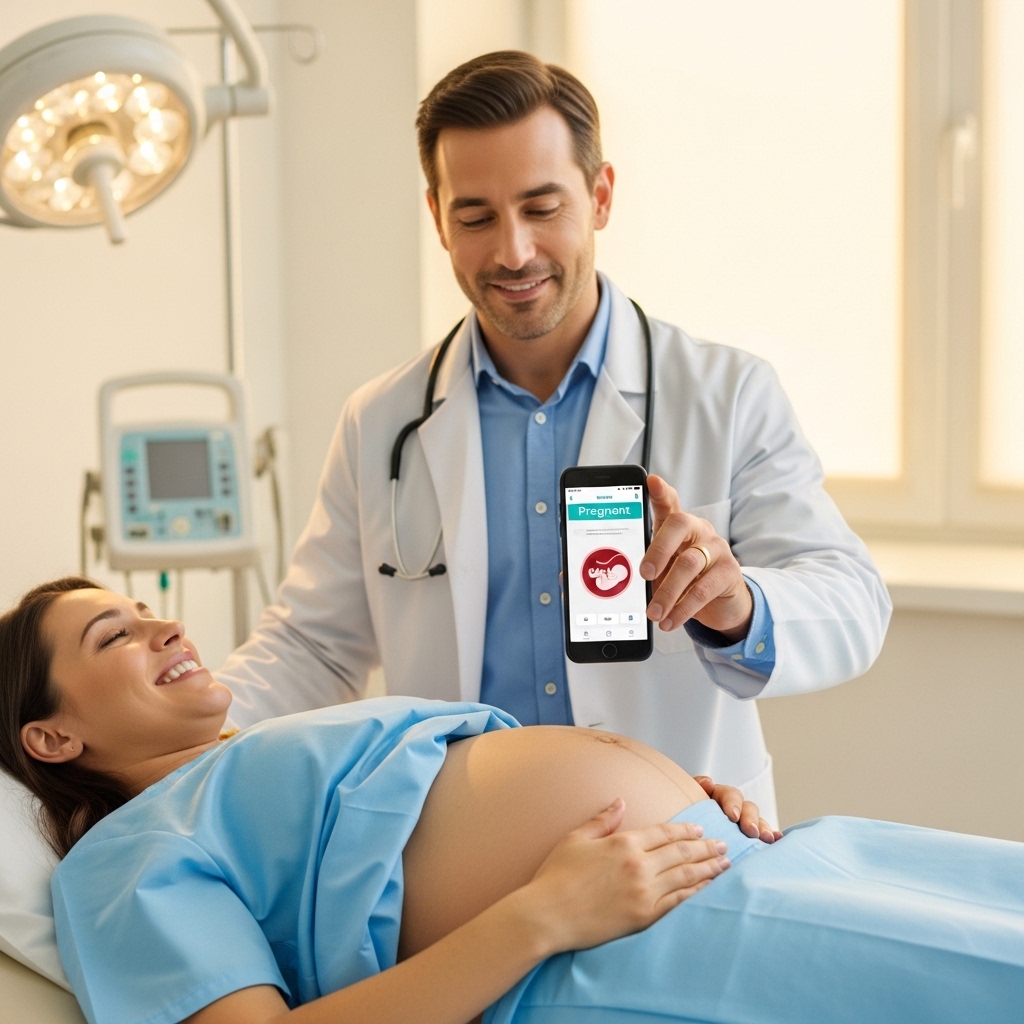
Maximizing the value of pregnancy tracking apps requires consistent engagement and realistic expectations. Daily logging provides the most accurate predictions and insights, but don’t let the app become a source of stress or obsession.
Remember that cycle tracking apps become more accurate over time as they learn your unique patterns. Give new apps at least three months of data before relying heavily on their predictions. During this learning period, the app is calibrating to your specific cycle characteristics.
Use your app as one tool among many in your pregnancy journey. Combine app insights with body awareness, medical testing, and healthcare provider guidance. This balanced approach provides the most complete and accurate picture of your fertility and pregnancy status.
Whether you’re hoping for pregnancy, trying to prevent it, or simply want to understand your body better, pregnancy tracking apps offer unprecedented access to information and support. While they cannot replace actual pregnancy tests or medical care, these digital tools empower women with knowledge, community, and guidance during one of life’s most significant journeys. The key is using them wisely, understanding their capabilities and limitations, and always prioritizing your health and wellbeing above any digital prediction. 🌈

Toni Santos is a visionary artisan and conceptual designer who channels the beauty of living organisms into structural expression. At Zureste, Toni explores the intricate elegance of insect anatomy, organic flow, and bioinspired design to create art that feels both natural and otherworldly.
Each creation Toni brings to life reflects a harmonic tension between structure and softness, wildness and control — echoing the complex intelligence found in the natural world. From beetle-like silhouettes to root-shaped contours, his work blurs the lines between biology, sculpture, and modern art.
Guided by fascination for metamorphosis, evolution, and pattern in nature, Toni’s pieces embody transformation. His BioLight Collection and conceptual series like Insect Type and Structure Aesthetics offer viewers more than aesthetic value — they present immersive experiences of living design.
As the creative force behind Zureste, Toni invites us to rethink beauty, architecture, and identity through a new lens — one shaped by wings, bones, spirals, and the microscopic poetry of the organic.
His creations reflect:
-
Design deeply rooted in the geometry of life
-
Inspiration from insects, roots, and the unseen natural order
-
A blend of science, spirituality, and visual storytelling
Whether you’re a lover of strange beauty, an admirer of evolution’s artistry, or a creative mind seeking something different, Toni welcomes you into a world where living forms become meaning, and surreal becomes sublime.