
Anúncios
Your smartphone can do much more than just calls and social media—it holds the power to detect invisible magnetic fields and locate hidden metals around you. 🧲


Modern smartphones are equipped with sophisticated sensors that were originally designed for navigation and screen rotation, but these same components can transform your device into a practical magnetic field detector.
Anúncios
The magnetometer sensor, present in virtually all contemporary phones, measures the Earth’s magnetic field and detects variations caused by metallic objects nearby.
This capability opens up fascinating possibilities for everyday exploration, from finding lost jewelry to checking for hidden wiring in walls before drilling.
Anúncios
Whether you’re a DIY enthusiast, a curious explorer, or someone who frequently loses metal objects, understanding how to use your phone as a metal detector can prove surprisingly useful in countless situations.
🔬 Understanding the Science Behind Magnetic Detection
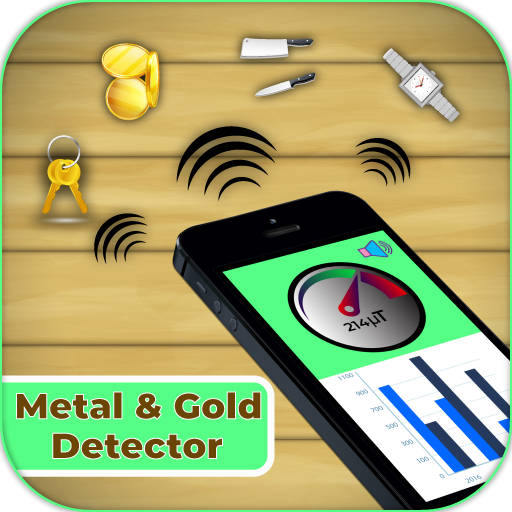
The magnetometer inside your smartphone operates on principles similar to a compass. This tiny sensor measures magnetic field strength in microteslas (µT) and responds to changes in the surrounding electromagnetic environment. The Earth’s natural magnetic field typically ranges between 25 and 65 µT, depending on your location on the planet.
When a metal object comes near your phone, it disturbs this magnetic field pattern. Ferromagnetic materials like iron, nickel, and cobalt create particularly strong disturbances because they actively interact with magnetic fields. Other metals may produce weaker signals, but they’re still detectable under the right conditions.
Your phone’s sensor constantly monitors three-dimensional magnetic field data across X, Y, and Z axes. Specialized apps interpret this raw data and translate it into user-friendly visual or audio feedback, making it easy to identify when you’re approaching a metal source.
Types of Metals Your Phone Can Detect
Not all metals respond equally to magnetic detection. Ferromagnetic materials produce the strongest and most reliable signals. These include common iron-based objects like nails, screws, tools, and steel rebar inside concrete walls.
Paramagnetic materials such as aluminum and titanium create weaker magnetic disturbances but can still be detected when they’re relatively close to the sensor. Non-magnetic metals like copper, brass, and gold are considerably more challenging to locate using smartphone magnetometers alone, as they don’t significantly disturb magnetic fields.
📱 How to Transform Your Phone Into a Metal Detector
Getting started with magnetic detection on your smartphone requires downloading a specialized app designed to access and interpret magnetometer data. These applications provide intuitive interfaces that display magnetic field strength in real-time, often using both visual graphs and audio signals.
Most metal detector apps feature calibration functions that help eliminate background interference. Before beginning your search, hold your phone away from any metal objects and run the calibration routine. This establishes a baseline reading that the app will use to identify anomalies.
The sensor location varies by phone model but is typically positioned near the camera module or along the top edge of the device. Knowing where your specific phone’s magnetometer sits helps you position it correctly during detection work.
Best Practices for Accurate Detection
To maximize detection accuracy, remove any phone cases containing magnetic elements, as these can interfere with readings. Metal rings, magnetic car mounts, and even credit cards with magnetic strips can create false positives or mask genuine signals.
Move your phone slowly and steadily across the search area, maintaining a consistent distance of 1-3 inches from the surface. Rapid movements may cause the app to miss subtle variations in the magnetic field. Watch for sudden spikes in the readings, which indicate the presence of metal.
🏠 Practical Applications in Daily Life
One of the most valuable home applications involves locating studs, pipes, and electrical wiring hidden behind walls. Before hanging heavy frames or drilling holes, scan the intended area to avoid hitting metal infrastructure. This simple precaution can prevent costly damage and potential safety hazards.
Gardeners and outdoor enthusiasts use magnetic detection to find lost tools, tent stakes, or buried metal objects in soil. The technique works particularly well in parks, beaches, and yards where metal items may have been accidentally dropped or buried over time.
Renovation projects benefit enormously from this technology. Identifying the exact position of rebar in concrete, locating junction boxes, or mapping out HVAC ducts becomes straightforward when you can visualize magnetic field variations through your phone screen.
Finding Lost Metal Items Around Your Home
Lost keys, earrings, or small tools that fall into difficult-to-reach spaces become much easier to locate with magnetic detection. Check under furniture, inside couch cushions, or along baseboards where small metal objects tend to migrate.
The systematic approach works best: divide the search area into sections and scan each thoroughly before moving on. Pay special attention to areas where magnetic readings suddenly increase, even if you can’t immediately see the object.
🛠️ Limitations and What Your Phone Cannot Do
Smartphone magnetometers have definite limitations compared to professional metal detectors. Detection depth rarely exceeds 6-8 inches, and even that requires the metal object to be relatively large and ferromagnetic. Small objects or deeply buried items will likely go unnoticed.
Environmental factors significantly impact performance. Electromagnetic interference from power lines, Wi-Fi routers, electronic devices, and even reinforced concrete can create background noise that obscures legitimate signals. Dense materials like thick walls or multiple layers of flooring reduce detection capabilities substantially.
Non-ferrous metals present particular challenges. While a professional metal detector uses electromagnetic induction to locate all conductive metals, your phone’s magnetometer primarily responds to ferromagnetic materials. Don’t expect to reliably find aluminum cans, copper pipes, or gold jewelry unless they’re extremely close to the sensor.
When to Use Professional Equipment Instead
Serious treasure hunting, archaeological surveys, or professional construction work demands dedicated metal detection equipment. These specialized tools offer superior depth penetration, discrimination capabilities that distinguish between metal types, and waterproof designs for diverse environments.
If you’re searching for valuable items, working in hazardous conditions, or need legally defensible results for construction projects, invest in proper equipment. Smartphone detection serves best as a convenient preliminary tool or for casual exploration.
🌍 Exploring Magnetic Anomalies in Your Environment
Beyond simple metal detection, your smartphone reveals fascinating insights about the magnetic landscape surrounding you. Different locations exhibit varying baseline magnetic field strengths due to geological factors, building materials, and human infrastructure.
Urban environments typically show higher and more variable magnetic readings compared to rural areas. Steel-framed buildings, subway systems, power distribution networks, and countless vehicles create a complex tapestry of magnetic disturbances that constantly shift throughout the day.
Natural magnetic anomalies exist as well. Certain rock formations contain high concentrations of magnetic minerals like magnetite. Volcanic areas, meteor impact sites, and mineral-rich geological formations produce distinctive magnetic signatures that your phone can detect and map.
Educational Opportunities for Science Exploration
Students and educators find tremendous value in using smartphones to visualize invisible magnetic fields. Demonstrating how magnets create field patterns, exploring electromagnetic induction, or mapping the Earth’s magnetic field becomes tangible and engaging with real-time sensor data.
Create simple experiments by placing various metal objects at different distances from the phone and observing how readings change. Compare ferromagnetic versus non-magnetic materials, test detection through different barrier materials, or investigate how temperature affects magnetic properties.
⚡ Advanced Techniques for Serious Enthusiasts
Experienced users develop systematic scanning patterns that ensure complete coverage of search areas. Grid patterns work exceptionally well for thorough searches, dividing the space into manageable sections that are methodically examined row by row.
Adjusting sensitivity settings in your detection app helps balance between finding small objects and avoiding false positives from background interference. Higher sensitivity picks up weaker signals but also amplifies noise, while lower settings focus on stronger, more obvious targets.
Recording and mapping your findings creates valuable reference data. Some advanced apps allow you to mark detected metal locations on virtual maps, building a comprehensive picture of subsurface infrastructure or documenting multiple discoveries across a search area.
Combining Detection Methods for Better Results
Pairing magnetic detection with visual inspection dramatically improves success rates. Once your phone indicates a metal presence, use a flashlight to examine shadows and surface variations, or employ a small camera to investigate tight spaces where objects might hide.
Acoustic feedback features in many apps provide hands-free operation. The increasing pitch or frequency of beeps as you approach metal allows you to keep your eyes on the physical environment rather than constantly watching the screen.
🔒 Safety Considerations and Responsible Usage
Always obtain proper permission before conducting metal detection on private property or protected lands. Many parks, historical sites, and archaeological areas prohibit metal detecting to preserve cultural resources and prevent unauthorized excavation.
When detecting near walls for drilling purposes, remember that your phone identifies metal presence but doesn’t distinguish between harmless nails and dangerous electrical wiring. If strong signals appear where you plan to drill, consult electrical plans or hire a professional to verify what’s behind the surface.
Respect your findings and local regulations. Discovered artifacts, particularly on public lands, may have historical or cultural significance. Report substantial finds to appropriate authorities rather than disturbing potentially important archaeological evidence.
📊 Comparing Detection Apps and Choosing the Right One
Numerous metal detector apps populate both Android and iOS platforms, each offering different features and interfaces. The best applications provide clear visual representations of magnetic field strength, adjustable sensitivity controls, and calibration tools for eliminating interference.
Look for apps that display both numerical data (measured in microteslas) and graphical representations. Real-time graphs showing magnetic field changes over time help identify genuine targets versus random fluctuations from sensor noise or hand movement.
User reviews offer valuable insights into app reliability and accuracy across different phone models. Magnetometer quality varies between manufacturers and device generations, so an app that performs excellently on one phone might struggle on another.
Features That Enhance Detection Experience
Audio feedback transforms detection from a purely visual task into a multi-sensory experience. Varying tones, beep frequencies, or volume changes provide intuitive feedback without requiring constant screen monitoring, particularly useful when searching in awkward positions or tight spaces.
History logging and location marking allow you to document discoveries systematically. Recording where you found specific items or mapped hidden infrastructure creates valuable reference information for future projects or repeated searches in the same location.
🌟 Unexpected Uses and Creative Applications
Security-conscious individuals use magnetic detection to sweep hotel rooms or rental properties for hidden surveillance devices. Many covert cameras and recording devices contain metal components that create detectable magnetic signatures, though this method shouldn’t replace professional security sweeps when serious concerns exist.
Automotive enthusiasts locate exact positions of steel body panels under plastic covers, identify hidden bolts and fasteners, or find the precise location of frame reinforcements when planning modifications. The technique helps avoid expensive mistakes during custom fabrication work.
Theatrical and film production teams map stage floors and sets for embedded metal anchor points, ensuring safe rigging attachment without visible surface indicators. The non-invasive detection method preserves finished surfaces while confirming structural connection locations.
🔮 Future Developments in Smartphone Sensing Technology
Emerging smartphone generations incorporate increasingly sophisticated sensor arrays with improved sensitivity and reduced power consumption. Machine learning algorithms will likely enable smarter interpretation of magnetic data, automatically distinguishing between different metal types and filtering environmental interference.
Integration with augmented reality platforms promises exciting visualization possibilities. Imagine pointing your phone at a wall and seeing a real-time overlay showing exactly where pipes, wires, and studs run through the structure—this technology already exists in prototype form.
Collaborative mapping initiatives could create crowdsourced magnetic field databases, documenting infrastructure locations, geological anomalies, and environmental conditions across entire cities or regions. Such data would prove invaluable for urban planning, archaeological research, and infrastructure maintenance.
✨ Maximizing Your Detection Success
Practice improves your ability to interpret magnetic readings and distinguish meaningful signals from background noise. Spend time experimenting with known metal objects at various distances and orientations to understand how your specific phone and app respond to different scenarios.
Environmental awareness enhances detection accuracy. Note the baseline magnetic field reading in different areas of your space, recognizing that some locations naturally exhibit higher or more variable magnetic activity than others due to structural elements or nearby equipment.
Patience and methodical technique yield better results than rushed searches. Systematic coverage of search areas, consistent scanning speed, and careful attention to subtle changes in readings dramatically increase your chances of locating exactly what you’re seeking.
The magnetic detection capabilities hiding in your pocket represent remarkable technology made accessible and practical. Whether you’re solving everyday problems, exploring scientific phenomena, or simply satisfying curiosity about the invisible forces around you, your smartphone provides a powerful window into the magnetic world that constantly surrounds us. With understanding, practice, and the right apps, you’ll discover countless applications for this versatile and surprisingly capable tool. 📲✨

Toni Santos is a visionary artisan and conceptual designer who channels the beauty of living organisms into structural expression. At Zureste, Toni explores the intricate elegance of insect anatomy, organic flow, and bioinspired design to create art that feels both natural and otherworldly.
Each creation Toni brings to life reflects a harmonic tension between structure and softness, wildness and control — echoing the complex intelligence found in the natural world. From beetle-like silhouettes to root-shaped contours, his work blurs the lines between biology, sculpture, and modern art.
Guided by fascination for metamorphosis, evolution, and pattern in nature, Toni’s pieces embody transformation. His BioLight Collection and conceptual series like Insect Type and Structure Aesthetics offer viewers more than aesthetic value — they present immersive experiences of living design.
As the creative force behind Zureste, Toni invites us to rethink beauty, architecture, and identity through a new lens — one shaped by wings, bones, spirals, and the microscopic poetry of the organic.
His creations reflect:
-
Design deeply rooted in the geometry of life
-
Inspiration from insects, roots, and the unseen natural order
-
A blend of science, spirituality, and visual storytelling
Whether you’re a lover of strange beauty, an admirer of evolution’s artistry, or a creative mind seeking something different, Toni welcomes you into a world where living forms become meaning, and surreal becomes sublime.