Anúncios
Building your family tree is more than connecting names and dates—it’s about preserving stories, honoring memories, and creating a visual legacy that lives forever through every image and moment captured.


Every family has a unique story waiting to be told. From the grandparents who immigrated seeking a better life, to the great-aunt who broke barriers in her profession, these narratives form the fabric of who we are. Yet, without documentation, these precious memories fade with time, leaving future generations disconnected from their roots.
Anúncios
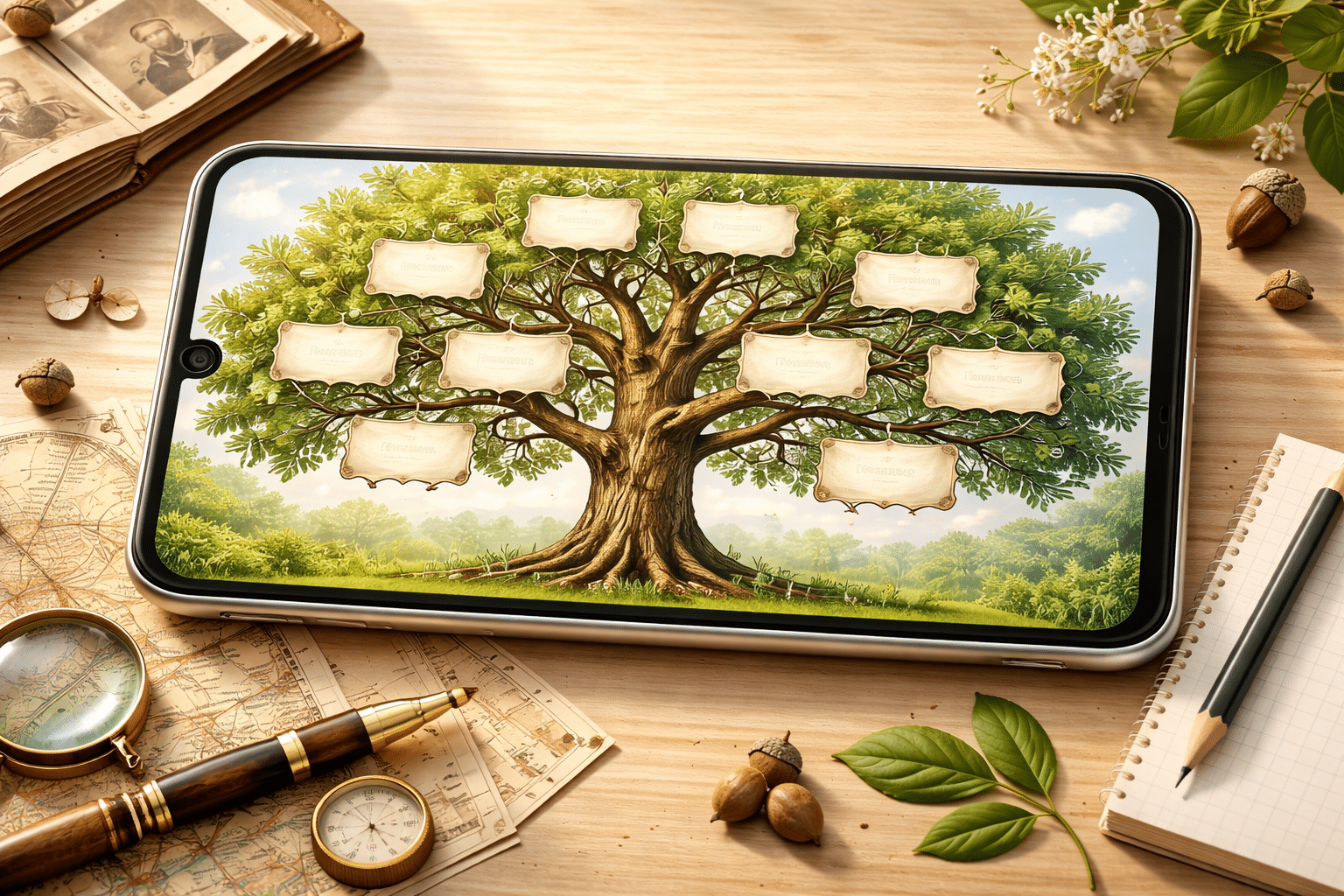
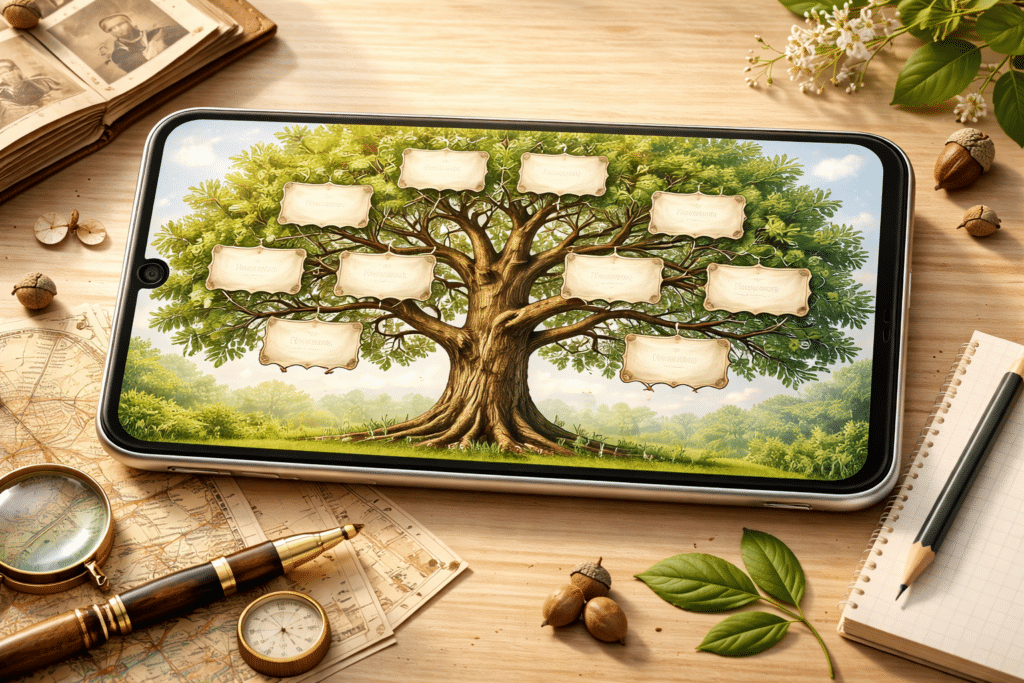
Creating your own genealogical tree transforms abstract history into something tangible and personal. By combining photographs, documents, and stories, you craft a living monument that breathes life into the past while securing memories for the future. Each branch represents not just a person, but a collection of experiences, choices, and moments that shaped your family’s journey.
🌳 Why Your Family Tree Matters More Than You Think
A family tree isn’t just a chart with names and dates—it’s a powerful tool for understanding identity, heritage, and belonging. Research shows that children who know their family history demonstrate higher self-esteem and better resilience when facing challenges. This knowledge provides context for their existence and a sense of continuity across generations.
Anúncios
Building this visual representation helps you discover patterns within your family: shared talents, recurring professions, migration patterns, and even health predispositions. These insights offer practical value while deepening your appreciation for the journey that led to your existence.
Beyond personal benefits, your genealogical work becomes a gift for future descendants. Imagine your great-great-grandchildren looking at photographs you preserved, reading stories you documented, and feeling connected to ancestors they never met. You become the bridge between past and future.
📸 Transforming Moments into Eternal Memories
Photographs hold extraordinary power in genealogy work. A single image can communicate what pages of text cannot—the warmth in someone’s smile, the fashion of an era, the pride in a graduation ceremony, or the joy at a wedding celebration.
When selecting images for your family tree, prioritize quality and variety. Include formal portraits alongside candid moments. A grandmother baking in her kitchen tells as much about her legacy as her wedding photograph. Action shots reveal personality; formal portraits show how people wanted to be remembered.
Digital restoration tools now allow you to enhance old, faded, or damaged photographs, bringing clarity to faces that time had begun to obscure. This technological advantage means even severely damaged images can be preserved and improved for future generations.
🖼️ Organizing Your Visual Archive
Start by gathering all available photographs from relatives. Many families have boxes of unlabeled photos gathering dust—these are genealogical goldmines. Organize a family scanning party where relatives can help identify people, places, and dates while sharing stories associated with each image.
Create a systematic digital filing system with clear naming conventions. Instead of “IMG_001.jpg,” use descriptive names like “1952_Mary_Johnson_Wedding_Boston.jpg.” This practice makes images searchable and maintains context even if they’re separated from your main database.
Consider these organizational categories for your photographic collection:
- Individual portraits: Organize by person and chronologically within each person’s folder
- Family group photos: Sorted by date and event
- Location-based images: Family homes, businesses, or significant places
- Event documentation: Weddings, graduations, military service, celebrations
- Everyday moments: Candid shots that capture daily life and personality

✍️ Capturing Stories That Breathe Life Into Names
Facts alone create skeletal trees—stories add flesh, blood, and soul. Each person in your genealogy lived a complete life full of dreams, challenges, triumphs, and ordinary moments. Your mission as a family historian involves capturing these narratives before they’re lost.
Interview older relatives while they’re still able to share memories. Prepare thoughtful questions that go beyond basic facts. Instead of “Where were you born?” ask “What do you remember about the neighborhood where you grew up?” The first yields a location; the second reveals experience.
Record these conversations when possible. Audio and video recordings preserve not just words but tone, accent, laughter, and emotion—elements that written transcripts can’t fully capture. These recordings become treasured artifacts themselves.
🎤 Effective Interview Techniques for Family History
Create a comfortable environment for storytelling. Avoid interrogation-style questioning. Instead, have a natural conversation where one memory triggers another. Bring photographs to the interview—they often unlock forgotten memories and provide visual references for stories.
Ask open-ended questions that encourage detailed responses:
- “What was a typical Sunday like in your childhood home?”
- “Tell me about the most influential person in your early life.”
- “What family traditions do you remember most fondly?”
- “How did your parents or grandparents meet?”
- “What was the hardest period your family went through?”
- “What advice did your parents give you that you still remember?”
Allow silence after questions—don’t rush to fill quiet moments. People often need time to reach back through decades of memories. The most meaningful stories sometimes emerge after thoughtful pauses.
🛠️ Practical Tools for Building Your Family Tree
Modern technology has revolutionized genealogical research, making what once required years of effort accessible in months or even weeks. Specialized software and platforms offer structured ways to organize information, attach documents, and collaborate with relatives across distances.
Digital platforms provide several advantages over traditional paper trees: unlimited space for expansion, easy editing when discovering new information, automatic relationship calculations, and the ability to attach unlimited photos and documents to each person.
Many genealogy applications connect to vast databases of historical records—census data, immigration documents, military records, and more—allowing you to discover ancestors you didn’t know existed and verify information you already had.
📱 Choosing the Right Platform for Your Needs
Consider what features matter most for your project. Some platforms excel at collaborative editing, perfect for families working together. Others prioritize privacy, ideal if you’re researching sensitive information. Some offer extensive DNA integration, while others focus on traditional document-based research.
Look for platforms with these essential features:
- Cloud storage and sync: Access your tree from any device without data loss
- Photo attachment and organization: Link multiple images to each person
- Source citation: Track where each piece of information came from
- Export options: Ensure you can download your data in standard formats
- Privacy controls: Protect sensitive information about living relatives
- Collaboration tools: Share editing access with trusted family members
Free platforms like FamilySearch offer robust features without subscription costs, making them excellent starting points. Premium services provide additional records access and advanced features that serious genealogists appreciate.
🔍 Research Strategies That Uncover Hidden Ancestors
Building your tree begins with what you know, then systematically expands backward through generations. Start by documenting yourself, your siblings, parents, grandparents—people you know personally or through family knowledge. This foundation ensures accuracy before venturing into more uncertain historical territory.
Once you’ve exhausted family knowledge, turn to documentation. Birth certificates, marriage licenses, death records, census entries, military service documents, immigration papers, and property deeds all provide verifiable facts that extend your tree with confidence.
Government archives, libraries, historical societies, and religious institutions maintain records that might seem inaccessible but are often available to researchers. Many have digitized collections searchable online, bringing previously obscure documents to your computer screen.
📚 Document Types That Unlock Genealogical Mysteries
Different document types reveal different aspects of ancestor lives. Census records show household composition, occupations, and property ownership at ten-year intervals. Immigration manifests list origin cities, traveling companions, and destination contacts. Military records detail service history, physical descriptions, and sometimes pension applications that name family members.
Church records often extend further back than civil registrations, especially in European research. Baptism, marriage, and burial registers maintained by parishes sometimes reach back centuries, with notes about parents, godparents, and witnesses that expand your family network.
Don’t overlook unusual sources: newspaper archives contain obituaries, wedding announcements, business advertisements, and community news that paint vivid pictures of ancestor lives. Land records track property purchases and inheritances. Court documents reveal conflicts, name changes, and legal proceedings that explain family mysteries.
🧬 DNA Testing: Science Meets Genealogy
Genetic genealogy has transformed family history research, providing scientific verification of relationships and breaking through documentary brick walls. A simple saliva sample can confirm connections, identify unknown relatives, and reveal ethnic origins across continents and centuries.
DNA tests for genealogy analyze different markers. Autosomal DNA, inherited from all ancestors, helps identify cousins and verify relationships within approximately five generations. Y-DNA follows the direct paternal line, useful for surname studies. Mitochondrial DNA traces the direct maternal line through centuries.
Testing companies maintain databases of millions of users. When your results are compared against this pool, you receive matches—people who share DNA segments with you, indicating common ancestry. Close matches might be second or third cousins; distant matches might share ancestors from centuries ago.
🧪 Maximizing the Value of Your DNA Results
Raw DNA data can be uploaded to multiple platforms, multiplying your match pool without purchasing additional tests. Sites like GEDmatch allow cross-company comparisons, connecting users from different testing services.
Genetic matches are most valuable when combined with traditional research. A DNA connection without genealogical documentation is interesting but limited. However, when genetic evidence aligns with documentary proof, you’ve built an exceptionally strong case for your family connections.
Participate in surname projects and haplogroup studies to connect with researchers focused on specific family lines or genetic groups. These collaborative efforts pool resources and knowledge, accelerating discoveries for all participants.
🎨 Creating Visual Presentations That Honor Your Heritage
Once you’ve gathered information, photographs, and stories, consider how to present this treasure trove meaningfully. A digital database serves researchers well, but most family members appreciate more accessible formats—visual presentations that don’t require genealogical expertise to appreciate.
Create printed family history books using photo book services. Arrange your tree visually with photographs beside each person, biographical summaries, and interesting stories. These physical books become family heirlooms passed through generations, displayed on coffee tables and referenced during family gatherings.
Design wall displays featuring ancestor photographs in matching frames, arranged to show family connections. Add small plaques with names, dates, and brief descriptions. This transforms a hallway or room into a family heritage gallery that prompts conversations and keeps memories alive daily.
🖼️ Digital Presentations for the Technology Age
Create video presentations combining photographs, documents, and recorded interviews with music and narration. These multimedia tributes work beautifully for family reunions, milestone celebrations, or memorial services, bringing ancestors to life through motion and sound.
Build a family website where relatives can access the complete tree, browse photographs, read stories, and contribute their own memories and images. Password-protected sites ensure privacy while facilitating collaboration across distances.
Social media groups dedicated to your family surname or specific branches create ongoing communities where relatives share discoveries, ask questions, and maintain connections. These digital gathering places often spark renewed interest in family history among younger generations.
💡 Preserving Your Work for Future Generations
Your genealogical work represents countless hours of research, interviews, organization, and documentation. Protecting this investment ensures future generations benefit from your dedication rather than starting from scratch.
Implement a comprehensive backup strategy. Cloud storage provides off-site protection against local disasters. External hard drives offer control over your data. Printed reports create physical backups that don’t depend on technology. Redundancy across multiple backup methods provides the strongest protection.
Share your work widely within the family. The more people who have copies, the less likely your research will be lost. Designate a family historian from the next generation who shows interest in continuing your work—mentor them in your research methods and organizational systems.
📦 Creating a Family History Archive
Organize physical documents and photographs in archival-quality materials—acid-free folders, boxes, and sleeves prevent deterioration. Store these materials in climate-controlled environments away from light, humidity, and temperature extremes.
Create a master index documenting what you have and where it’s located. This inventory helps others navigate your collection after you’re gone, ensuring nothing valuable gets discarded by someone who doesn’t understand its significance.
Write a letter to future family historians explaining your research methodology, sources you consulted, brick walls you encountered, and theories you developed but couldn’t prove. This context helps descendants continue your work effectively rather than duplicating efforts or pursuing dead ends you already exhausted.
🌟 The Living Legacy You Create Today
Your family tree project isn’t a task to complete and file away—it’s a living, growing legacy that evolves with each generation. Children born today will someday add their own branches. Stories you preserve now will answer questions asked decades from now. Photographs you scan today will be treasured by people not yet born.
This work connects you deeply with those who came before, honoring their struggles, celebrating their achievements, and ensuring their lives matter beyond their immediate circle. You become the keeper of stories that would otherwise vanish, the bridge between generations separated by time.
Every name you add, every photograph you restore, every story you record creates ripples extending far beyond your immediate effort. You’re building something larger than yourself—a monument to family, continuity, and the enduring bonds that connect us across time and distance.
Begin today with what you know. Contact that elderly relative you’ve been meaning to interview. Scan those old photographs gathering dust. Ask your parents about their grandparents. Each small action moves your project forward, transforming intention into legacy, moment by moment, image by image, creating eternal memories for all who follow.
Your family tree awaits—not as an abstract concept or overwhelming project, but as a meaningful journey of discovery that honors the past while securing memories for the future. The best time to start was yesterday; the second best time is right now. 🌳✨

Toni Santos is a visionary artisan and conceptual designer who channels the beauty of living organisms into structural expression. At Zureste, Toni explores the intricate elegance of insect anatomy, organic flow, and bioinspired design to create art that feels both natural and otherworldly.
Each creation Toni brings to life reflects a harmonic tension between structure and softness, wildness and control — echoing the complex intelligence found in the natural world. From beetle-like silhouettes to root-shaped contours, his work blurs the lines between biology, sculpture, and modern art.
Guided by fascination for metamorphosis, evolution, and pattern in nature, Toni’s pieces embody transformation. His BioLight Collection and conceptual series like Insect Type and Structure Aesthetics offer viewers more than aesthetic value — they present immersive experiences of living design.
As the creative force behind Zureste, Toni invites us to rethink beauty, architecture, and identity through a new lens — one shaped by wings, bones, spirals, and the microscopic poetry of the organic.
His creations reflect:
-
Design deeply rooted in the geometry of life
-
Inspiration from insects, roots, and the unseen natural order
-
A blend of science, spirituality, and visual storytelling
Whether you’re a lover of strange beauty, an admirer of evolution’s artistry, or a creative mind seeking something different, Toni welcomes you into a world where living forms become meaning, and surreal becomes sublime.