Anúncios
# HTML Article: Discover Everything About Your Ancestry
Ever wondered where your family name originated or who walked the earth centuries before you? Discovering your ancestry connects you to your past in powerful ways.
Anúncios


The journey to uncover your roots has never been more accessible. With modern technology and genealogical resources, you can trace your family tree back through generations, discovering stories that shaped who you are today. Your surname carries centuries of history, migration patterns, and cultural heritage waiting to be explored.
Understanding your ancestry isn’t just about names and dates—it’s about connecting with the lived experiences of those who came before you. From medieval villages to immigrant ships, from family trades to inherited traits, your lineage tells a unique story that deserves to be discovered and preserved for future generations.
Anúncios
🌍 Why Your Surname Holds the Key to Your Past
Your family name is far more than a simple identifier. It’s a historical artifact that can reveal your ancestors’ occupations, geographic origins, and social standing. Surnames emerged at different times across cultures, typically between the 11th and 16th centuries in Europe, though naming conventions vary worldwide.
Many surnames derive from occupations—Smith, Baker, Carpenter, and Taylor all indicate ancestral professions. Others come from geographic features like Hill, Rivers, or Woods, suggesting where your ancestors lived. Patronymic surnames like Johnson, O’Brien, or Fernández identify lineage through a father’s name.
Understanding the etymology of your surname opens doors to researching specific regions and time periods. A surname of Scottish origin points you toward Highland clans and their territories, while Spanish surnames might connect you to particular provinces or noble houses.
📜 Tracing Your Family Tree: Where to Begin
Starting your genealogical research can feel overwhelming, but breaking it into manageable steps makes the process rewarding. Begin with what you know—your immediate family. Document names, birth dates, marriage dates, and death dates for parents, grandparents, and great-grandparents if possible.
Interview older family members before it’s too late. They hold invaluable oral histories, stories, and details that aren’t recorded anywhere else. Ask about family traditions, migration stories, occupations, and even family conflicts—these human details bring your ancestors to life.
Essential Documents for Genealogy Research
Building your family tree requires gathering various historical documents. Each record type offers different insights into your ancestors’ lives:
- Birth certificates confirm parentage, birth locations, and dates with official accuracy
- Marriage records reveal spouses’ names, parents’ names, and witnesses who might be relatives
- Death certificates provide cause of death, occupation, residence, and parents’ information
- Census records show household compositions, ages, birthplaces, and occupations every decade
- Immigration documents detail arrival dates, ports of entry, and countries of origin
- Military records offer service details, physical descriptions, and pension applications
- Church records contain baptisms, confirmations, marriages, and burials before civil registration
- Land deeds track property ownership and can reveal family relationships through sales
🧬 DNA Testing: Unlocking Your Genetic Heritage
Genetic genealogy has revolutionized ancestry research by providing biological confirmation of family connections and revealing ethnic origins across continents. DNA testing offers insights that traditional paper trails cannot, especially when records are lost, destroyed, or never existed.
Autosomal DNA tests analyze chromosomes inherited from both parents, identifying relatives up to about five or six generations back. These tests also provide ethnicity estimates showing what percentage of your DNA comes from various geographic regions worldwide.

Y-DNA testing follows the direct paternal line, passed from father to son virtually unchanged through generations. This test helps trace surname lineages and can confirm or disprove family legends about male-line ancestry.
Mitochondrial DNA (mtDNA) testing traces the direct maternal line, passed from mother to all children but only inherited further through daughters. This reveals your deep maternal ancestry stretching back thousands of years.
What Your DNA Results Really Tell You
Interpreting DNA results requires understanding both their strengths and limitations. Ethnicity estimates represent statistical probabilities based on reference populations, not exact percentages of heritage. They update as companies refine their algorithms and expand reference databases.
DNA matches connect you with living relatives who share segments of DNA, indicating common ancestors. Close matches share recent ancestors, while distant matches might share ancestors from several centuries ago. Building your family tree helps identify how you’re related to these matches.
🏛️ Historical Records: Mining Archives for Ancestral Stories
Beyond vital records, countless document types preserve glimpses of your ancestors’ lives. Newspapers contain obituaries, wedding announcements, business advertisements, and even crime reports. City directories list residents’ addresses and occupations annually, tracking movement through urban areas.
Court records reveal property disputes, probate proceedings, naturalizations, and sometimes unfortunate criminal activities. These documents often provide detailed family information, especially wills that name spouses, children, and sometimes extended family members.
School records, professional licenses, club memberships, and religious congregations all left paper trails. Your ancestor who belonged to a fraternal organization might have a membership application listing birthplace and parents’ names.
🗺️ Migration Patterns: Following Your Ancestors’ Journeys
Understanding historical migration patterns helps predict where to search for records. Economic opportunities, religious persecution, famines, wars, and natural disasters all drove massive population movements throughout history.
The Great Famine drove millions from Ireland to North America, Australia, and Britain in the 1840s. Political upheavals sent waves of German immigrants across the Atlantic throughout the 19th century. The California Gold Rush attracted fortune-seekers worldwide, while industrialization drew rural populations to growing cities.
Tracing these movements requires researching both departure points and destinations. Passenger lists, border crossings, and naturalization papers document international moves, while census records track domestic migration decade by decade.
Common Migration Routes Throughout History
| Time Period | Origin Regions | Common Destinations | Primary Motivations |
|---|---|---|---|
| 1600s-1700s | England, Scotland, Ireland | North American colonies | Religious freedom, land ownership |
| 1840s-1850s | Ireland, Germany | USA, Canada, Australia | Famine, political unrest |
| 1880s-1920s | Southern & Eastern Europe | USA, Argentina, Brazil | Economic opportunity |
| 1930s-1940s | Germany, Poland, Austria | USA, Palestine, UK | Persecution, war displacement |
| 1950s-1970s | Rural areas worldwide | Urban centers | Industrialization, employment |
💡 Breaking Through Brick Walls in Research
Every genealogist encounters ancestors who seem impossible to trace further. Records may be destroyed, names might be spelled inconsistently, or ancestors might have disappeared from documentation entirely. These “brick walls” require creative problem-solving strategies.
Research collateral relatives—siblings, aunts, uncles, and cousins of your direct ancestors. They often appear in records when your direct ancestor doesn’t, and their documentation can reveal family connections and locations.
Consider alternative name spellings, especially for ancestors from non-English-speaking countries. Phonetic variations, anglicizations, and transcription errors mean the same person might appear as Johann, John, or Giovanni depending on the record.
Advanced Research Techniques
Cluster genealogy examines entire communities rather than individual families. Your ancestor’s neighbors, witnesses to documents, and godparents often shared kinship ties. Mapping these relationships can reveal hidden family connections.
FAN club research focuses on Friends, Associates, and Neighbors. These people appear repeatedly in your ancestor’s records and can provide clues when direct evidence is missing. That witness to a marriage might be a brother-in-law from a previous generation.
Reverse genealogy starts with a known ancestor and researches all descendants forward through time. This technique helps identify living relatives who might have family information, photographs, or documents.
📸 Preserving Family History for Future Generations
Discovering your ancestry creates responsibility for preserving and sharing what you learn. Digital tools make it easier than ever to organize, protect, and distribute family history information.
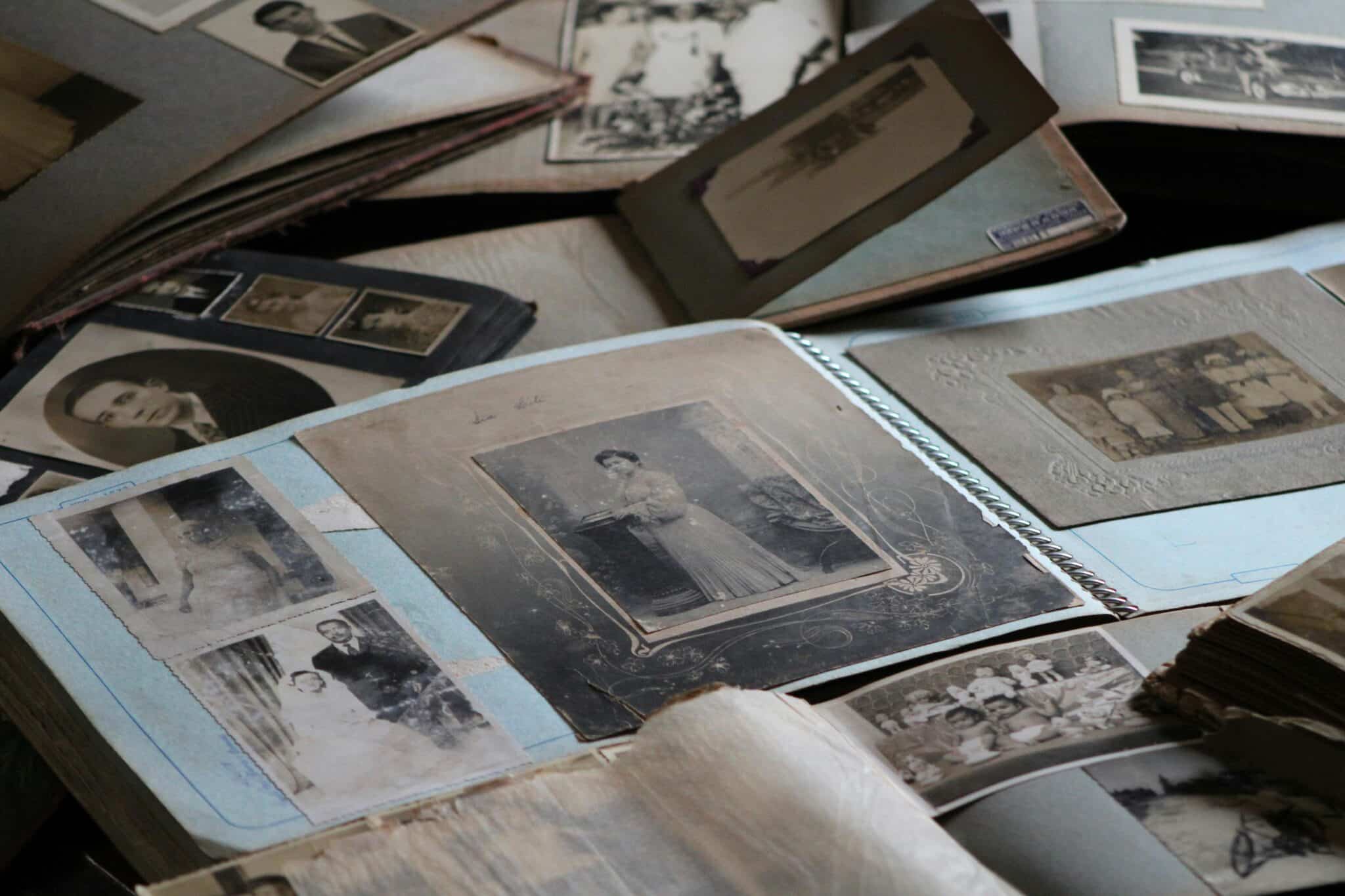
Scan photographs, documents, and artifacts in high resolution. Store digital files in multiple locations—cloud storage, external drives, and shared family accounts. Physical photographs deteriorate over time, so digitizing them ensures their survival.
Write down the stories behind the facts. That census record showing your great-grandmother worked as a seamstress becomes meaningful when paired with the story of how she sewed wedding dresses to support her family after being widowed.
Creating Your Family History Narrative
Transform your research into engaging narratives that bring ancestors to life. Rather than listing dry facts, place ancestors in historical context. What major events were happening during their lives? What would daily life have been like in their time and place?
Include historical photographs of towns, occupations, and time periods to help descendants visualize their ancestors’ world. Maps showing migration routes or ancestral homelands add geographic context to family stories.
🌳 Understanding Cultural Heritage and Traditions
Your ancestry research reveals not just names and dates but cultural traditions passed through generations. Food preferences, holiday customs, religious practices, and even superstitions often trace back to ancestral homelands.
Many families maintain traditions without knowing their origins. That special recipe might be a regional dish from your great-great-grandmother’s village. The way your family celebrates certain holidays might reflect practices from a specific ethnic tradition.
Learning about ancestral cultures deepens your understanding of yourself. The languages they spoke, the music they enjoyed, the clothes they wore—all contribute to the rich tapestry of your heritage.
🔍 Online Resources and Tools for Ancestry Research
Digital resources have democratized genealogy research, bringing archives and records to your home computer. Subscription websites offer billions of indexed records searchable by name, date, and location.
Free resources provide tremendous value for budget-conscious researchers. Government archives increasingly digitize records and make them publicly accessible. FamilySearch, operated by The Church of Jesus Christ of Latter-day Saints, offers extensive free records and family tree collaboration tools.
Local libraries often provide free access to subscription genealogy websites. Historical and genealogical societies maintain specialized collections for specific regions or ethnic groups. University archives preserve unique manuscript collections unavailable elsewhere.
Essential Digital Tools for Genealogists
- Ancestry platforms provide billions of records and DNA matching services
- FamilySearch offers free access to extensive records and collaborative family trees
- MyHeritage specializes in international records and photo enhancement technology
- Findmypast excels in British and Irish records with unique collections
- Archives.gov houses U.S. federal records including census, military, and immigration documents
- Chronicling America provides searchable historical newspapers from across the United States
- Ellis Island Database searches passenger arrival records for millions of immigrants
👥 Connecting with Living Relatives Through Research
One of genealogy’s greatest rewards comes from connecting with previously unknown relatives. DNA matches, shared family trees, and genealogy forums bring together cousins scattered across continents.
These connections often bring unexpected benefits. Distant cousins might possess family photographs, documents, or stories from different branches of the family tree. Someone researching the same ancestral line might have already solved research problems that stump you.
Approach new relatives respectfully and patiently. Not everyone shares the same enthusiasm for family history research. Some people might have complicated feelings about certain ancestors or family events. Share your findings thoughtfully and listen to their perspectives.
✨ The Emotional Journey of Discovering Your Roots
Ancestry research is never just an intellectual exercise. Discovering who your ancestors were creates profound emotional connections across time. Learning about their struggles, triumphs, loves, and losses helps you understand your own identity more deeply.
You might discover ancestors who showed remarkable courage—immigrants who crossed oceans with nothing, pioneers who settled untamed territories, or individuals who stood up for justice despite personal cost. These stories inspire and remind you of the strength flowing through your veins.
Sometimes you’ll uncover difficult truths. Ancestors who participated in historical injustices, families torn apart by conflict, or hardships too painful to fully comprehend. Processing these discoveries with honesty and compassion helps you understand the complexity of human experience.
Your family tree eventually connects to everyone else’s. Go back far enough, and we’re all cousins. This realization of shared humanity makes genealogy more than a personal hobby—it becomes a way of understanding our interconnectedness as a species.
🎯 Taking the First Step in Your Ancestry Journey
The best time to start researching your ancestry was years ago when more relatives were still living. The second-best time is today. Every day that passes means losing opportunities to gather information from aging relatives and access records before they deteriorate.
Begin simply—write down everything you know about your parents, grandparents, and great-grandparents. Record full names, birth dates, marriage dates, death dates, and any stories you remember. This foundation guides all future research.
Reach out to family members with questions. Ask for copies of documents they might have—old birth certificates, wedding announcements, obituaries, or military discharge papers. Handle original documents carefully, and offer to make copies they can keep.
Consider taking a DNA test to complement your documentary research. The combination of genetic matches and traditional records creates a more complete picture of your ancestry than either approach alone.
Join online genealogy communities where experienced researchers share advice, solve problems collaboratively, and celebrate discoveries together. The genealogy community welcomes newcomers and understands the addictive nature of the “just one more record” mentality that captures every researcher eventually.
Your ancestors lived, loved, worked, and dreamed of better futures—often for descendants they would never meet. By researching and preserving their stories, you honor their memories and ensure they’re not forgotten. You’re giving them a kind of immortality, keeping their names and stories alive for generations yet to come.
The journey to discover your ancestry, trace your surname, and identify your ancestors is deeply personal yet universally human. Every family tree tells a unique story while connecting to the broader human narrative. Your research contributes to preserving human history one family at a time, creating a legacy that extends both backward and forward through time. 🌟

Toni Santos is a visionary artisan and conceptual designer who channels the beauty of living organisms into structural expression. At Zureste, Toni explores the intricate elegance of insect anatomy, organic flow, and bioinspired design to create art that feels both natural and otherworldly.
Each creation Toni brings to life reflects a harmonic tension between structure and softness, wildness and control — echoing the complex intelligence found in the natural world. From beetle-like silhouettes to root-shaped contours, his work blurs the lines between biology, sculpture, and modern art.
Guided by fascination for metamorphosis, evolution, and pattern in nature, Toni’s pieces embody transformation. His BioLight Collection and conceptual series like Insect Type and Structure Aesthetics offer viewers more than aesthetic value — they present immersive experiences of living design.
As the creative force behind Zureste, Toni invites us to rethink beauty, architecture, and identity through a new lens — one shaped by wings, bones, spirals, and the microscopic poetry of the organic.
His creations reflect:
-
Design deeply rooted in the geometry of life
-
Inspiration from insects, roots, and the unseen natural order
-
A blend of science, spirituality, and visual storytelling
Whether you’re a lover of strange beauty, an admirer of evolution’s artistry, or a creative mind seeking something different, Toni welcomes you into a world where living forms become meaning, and surreal becomes sublime.