
Anúncios
Learning piano has never been easier—now you can master the keys from your phone with simple, practical lessons designed for real progress. 🎹


Gone are the days when learning piano required expensive lessons, rigid schedules, and hours of commuting to music schools. Technology has transformed music education into something accessible, flexible, and genuinely enjoyable. Whether you’re a complete beginner or someone who tried learning years ago and gave up, mobile learning apps now offer a fresh, engaging approach that fits perfectly into modern life.
Anúncios
The beauty of learning piano on your phone lies not just in convenience, but in how these apps adapt to your pace, provide instant feedback, and keep you motivated with gamified progress tracking. You’re no longer alone in your musical journey—intelligent technology guides every note, every chord, and every melody you play.
Why Mobile Piano Learning Works So Well 📱
Traditional piano lessons follow a one-size-fits-all approach that doesn’t account for individual learning speeds or personal schedules. Mobile apps revolutionize this by offering personalized learning paths that adjust based on your performance and progress.
Anúncios
These applications use advanced audio recognition technology to listen as you play, providing real-time feedback on timing, accuracy, and technique. This immediate response creates a learning loop that’s incredibly effective—you make a mistake, the app catches it instantly, and you can correct it right away rather than practicing errors for an entire week between lessons.
The flexibility factor cannot be overstated. Whether you have five minutes during your lunch break or an hour before bed, you can practice meaningful lessons. This accessibility dramatically increases practice consistency, which is the true secret to mastering any instrument.
What Makes These Apps Perfect for Beginners ✨
Starting piano as an adult can feel intimidating. Reading sheet music looks like decoding ancient hieroglyphics, and coordinating both hands seems physically impossible at first. Quality piano learning apps break down these barriers with carefully structured curricula designed specifically for absolute beginners.
Lessons typically start with single-note melodies using just one hand, gradually introducing rhythm concepts and hand coordination. The progression feels natural rather than overwhelming. Visual cues often supplement traditional notation—colored notes, falling bars, or highlighted keys guide you until reading music becomes second nature.
Many apps include extensive song libraries featuring popular music across genres. Instead of spending months on exercises before playing recognizable pieces, you might be playing simplified versions of your favorite songs within your first week. This immediate musical gratification keeps motivation high during the challenging early stages.
The Technology Behind Interactive Piano Lessons 🎵
Modern piano learning apps employ sophisticated audio recognition algorithms that analyze the sounds coming from your piano or keyboard in real time. These systems can distinguish individual notes, detect timing accuracy, and even assess dynamics (how hard or soft you’re playing).
The apps work with acoustic pianos, digital keyboards, and MIDI-connected instruments. For acoustic pianos, your phone’s microphone picks up the sound and processes it instantly. With MIDI keyboards, you can connect directly via cable or Bluetooth for even more precise tracking.
Artificial intelligence plays an increasing role in personalizing your learning experience. These systems analyze your performance patterns—which types of exercises you struggle with, what time of day you practice best, how quickly you master new concepts—and adjust future lessons accordingly. It’s like having a teacher who knows exactly what you need to work on next.
Building a Strong Foundation: Technique and Theory 🎼
While fun and convenience attract people to mobile piano learning, comprehensive apps don’t sacrifice musical fundamentals. Proper hand positioning, finger numbering, posture, and basic music theory are woven throughout the curriculum.
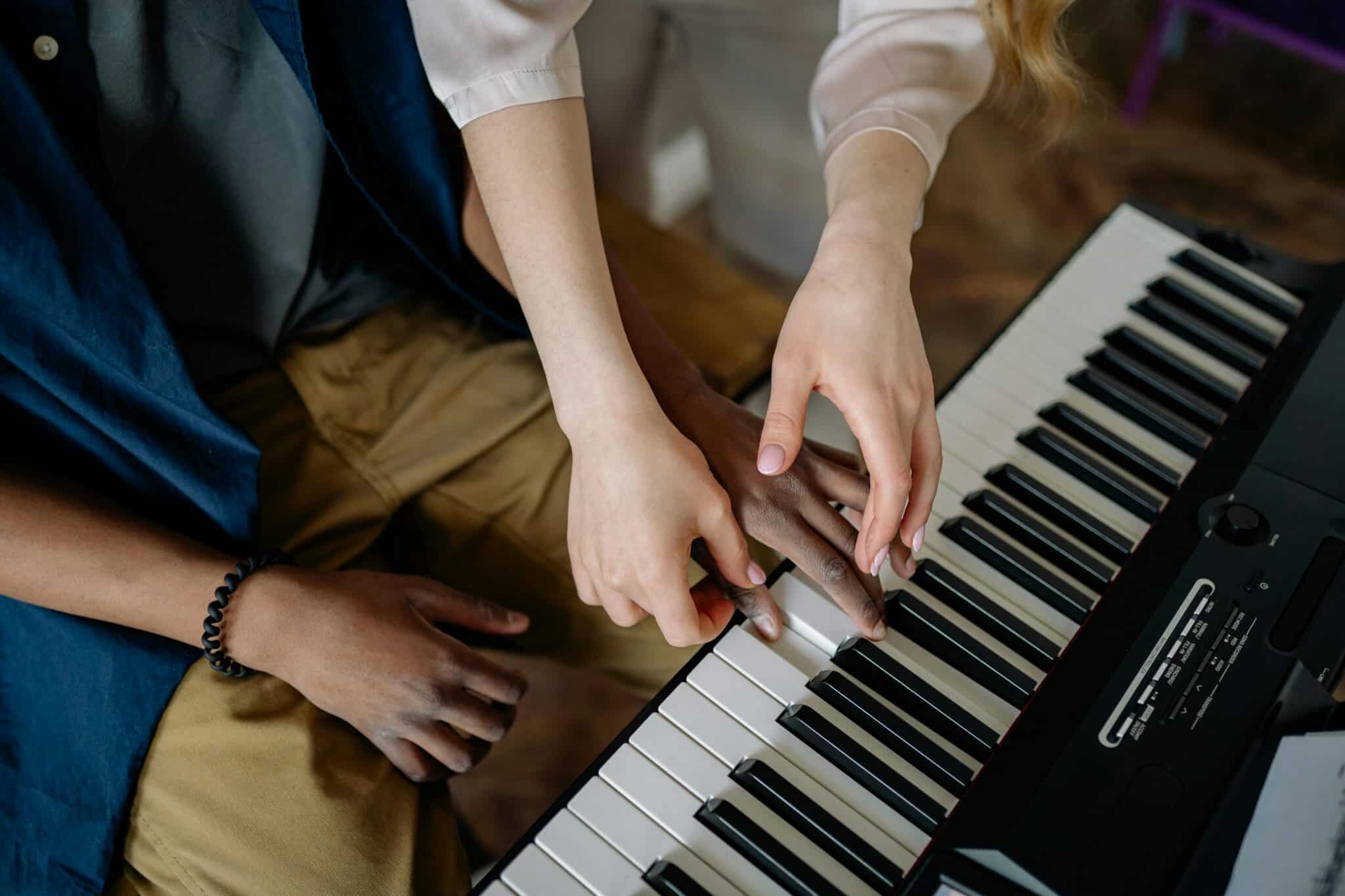
Video demonstrations show correct technique from multiple angles. Some apps include specific exercises for finger independence and strength building, essential skills that prevent bad habits from forming. Theory concepts like note values, time signatures, key signatures, and chord structures are introduced gradually within the context of songs you’re actually playing.
This integrated approach to theory makes abstract concepts concrete. Instead of memorizing that a quarter note gets one beat, you experience it while playing a melody you enjoy. The knowledge sticks because it’s immediately applicable and relevant to your musical goals.

From Simple Melodies to Complex Compositions 🎹
The journey from playing “Twinkle Twinkle Little Star” with one finger to performing Beethoven’s “Für Elise” happens through carefully designed progression systems. Each lesson builds on previous skills while introducing new challenges at a manageable pace.
Early lessons focus on note recognition and basic rhythm. As you advance, you’ll encounter intervals, chords, scales, and more complex rhythmic patterns. Hand independence develops naturally as songs require increasingly sophisticated coordination between left and right hands.
Advanced learners aren’t left behind either. Many apps offer intermediate and advanced courses covering jazz improvisation, classical repertoire, music composition, and genre-specific techniques. The learning never has to stop, regardless of your skill level.
Practice Strategies That Actually Work ⏰
Having a powerful learning tool means nothing without effective practice habits. The most successful piano learners using mobile apps share common strategies that maximize progress while preventing burnout.
Consistency trumps marathon sessions every time. Practicing fifteen minutes daily yields better results than cramming two hours on Sunday. Apps reinforce this with streak tracking and daily goals that encourage regular engagement without demanding unrealistic time commitments.
Targeted practice on trouble spots makes sessions more productive. When you repeatedly stumble over a particular measure, most apps allow you to loop that section at a slower tempo until muscle memory develops. Gradually increasing speed builds both accuracy and confidence.
Balancing new material with review prevents the frustration of forgetting previously learned songs. Revisiting pieces you mastered weeks ago keeps them fresh while providing satisfying evidence of your progress. It’s incredibly motivating to play through a song that once seemed impossible but now flows effortlessly.
Overcoming Common Challenges in Self-Directed Learning 💪
Learning piano independently requires self-motivation and problem-solving skills that structured lessons with a human teacher might otherwise provide. Understanding potential obstacles helps you navigate them successfully.
Plateaus are normal and expected. There will be weeks when progress seems to stall completely. During these periods, the key is maintaining consistent practice even when breakthroughs aren’t happening. Your brain and fingers are consolidating skills during apparent plateaus, preparing for the next leap forward.
Technical questions sometimes arise that apps can’t immediately answer. Active online communities surrounding popular piano learning apps provide peer support, tips, and encouragement. YouTube tutorials can supplement app lessons when you need a different explanation of a concept or technique.
Staying motivated requires connecting with your “why.” Are you learning piano to reduce stress? To play at family gatherings? To understand music more deeply? To challenge yourself with a new skill? Reminding yourself of your personal motivation during difficult moments keeps you moving forward when enthusiasm wanes.
Choosing the Right Equipment for Mobile Learning 🎹
While you can technically start with just your phone and any piano, certain equipment choices enhance the learning experience significantly. Understanding your options helps you invest wisely based on your budget and commitment level.
Keyboard choice matters more than many beginners realize. Full-sized, weighted keys that respond to touch dynamics create proper technique from the start. Smaller keyboards with springy, unweighted keys work temporarily but may require technique adjustments later when transitioning to acoustic pianos.
A keyboard stand at proper height prevents back and shoulder strain during practice. Dining tables or desks often position keyboards too high or low for healthy posture. An adjustable bench or chair ensures your forearms remain parallel to the floor while playing.
Headphones offer tremendous flexibility, allowing practice at any hour without disturbing others. They also help you focus on subtle details in your playing that might be harder to hear through speakers. Many digital pianos include headphone jacks specifically for this purpose.
Beyond Solo Practice: Playing With Others 🎶
While mobile apps excel at individual instruction, music becomes even more rewarding when shared. As your skills develop, opportunities to play with others add new dimensions to your musical experience.
Some apps include duet modes where the app plays one part while you play another, simulating ensemble playing. This develops listening skills and timing accuracy essential for future collaborations with real musicians.
Local music communities, whether through community centers, churches, or informal meetup groups, often welcome pianists at various skill levels. Playing for others, even informally, builds confidence and provides motivation to polish your pieces beyond just getting the notes right.
Recording your performances, even just on your phone, serves multiple purposes. You’ll notice mistakes you didn’t catch while playing, track improvement over time, and have shareable evidence of your accomplishments to celebrate with friends and family.
The Cognitive Benefits of Piano Learning 🧠
The value of learning piano extends far beyond musical ability. Research consistently demonstrates significant cognitive benefits from musical training, particularly with piano due to its demand for bimanual coordination and complex pattern recognition.
Piano practice strengthens neural connections between brain hemispheres, improving overall cognitive function. Reading music while coordinating both hands and listening critically creates a full-brain workout that few other activities match.
Memory improvement is a well-documented benefit. Memorizing pieces exercises both short-term working memory and long-term retention. These skills transfer to other areas of life, from remembering shopping lists to retaining information from books or lectures.
Stress reduction and emotional regulation improve with regular musical practice. The focused attention required for playing creates a meditative state that quiets mental chatter. Expressing emotions through music provides a healthy outlet that words sometimes can’t capture.
Setting Realistic Goals and Celebrating Progress 🎯
Goal-setting transforms vague aspirations into achievable milestones that maintain motivation throughout your learning journey. Effective goals balance ambition with realism, pushing you forward without setting you up for discouragement.
Short-term goals might include mastering a specific song, practicing five days this week, or learning to read bass clef notes. These provide frequent wins that build confidence and momentum. Medium-term goals could involve completing a course level, performing for friends, or learning songs in a new genre.
Long-term vision keeps you inspired during the inevitable difficult periods. Perhaps you dream of playing at a family wedding, composing your own music, or simply enjoying an hour at the piano as your daily wind-down ritual. These bigger pictures give meaning to daily practice sessions.
Celebrating milestones matters more than many learners realize. When you complete a challenging song or reach a new level in your app, acknowledge the achievement. Share it with someone, treat yourself to something special, or simply take a moment to appreciate how far you’ve come from those first hesitant notes.
Making Piano Part of Your Daily Life 🌟
The ultimate goal isn’t just learning piano—it’s integrating this beautiful skill into your everyday existence in ways that enrich your life. This transformation from “practicing piano” to “being a pianist” represents a profound shift in identity and lifestyle.
Creating a dedicated practice space, even just a corner of a room, signals to your brain that piano is a priority. When your instrument is easily accessible rather than buried in a closet, you’re far more likely to play spontaneously, turning idle moments into musical ones.
Connecting piano to other interests amplifies enjoyment. Love video game music? Learn those soundtracks. Passionate about a particular era or culture? Explore its musical traditions. Piano can be a lens through which you engage more deeply with things you already love.
Sharing your journey, whether through social media, with family, or in online communities, creates accountability and connection. Other learners understand the unique challenges and triumphs of the musical path. Their support and shared experiences make the journey less solitary and more sustainable.
Your Musical Journey Starts Today 🚀
Every accomplished pianist started exactly where you are now—at the beginning, unsure if they could really do this, wondering if it’s too late or too difficult. The difference between those who eventually play beautifully and those who don’t isn’t talent or perfect pitch or unusually flexible fingers. It’s simply starting and then continuing.
Mobile piano learning has removed nearly every barrier that once made piano education inaccessible. No need to coordinate schedules with teachers, commute to lessons, or invest thousands before knowing if you’ll stick with it. Your phone, a keyboard, and genuine curiosity are enough to begin a lifelong relationship with music.
The piano you’ll play a year from now—flowing through pieces that currently seem impossible—begins with the single note you play today. That first note leads to a second, then a measure, then a phrase, then a complete song, then a repertoire that reflects your personality and passion.
Download a quality piano learning app, sit down at a keyboard, and play that first note. The musical journey of a lifetime is waiting, and it fits perfectly in your pocket. Your future self, playing confidently and joyfully, will thank you for starting today rather than someday. 🎹✨

Toni Santos is a visionary artisan and conceptual designer who channels the beauty of living organisms into structural expression. At Zureste, Toni explores the intricate elegance of insect anatomy, organic flow, and bioinspired design to create art that feels both natural and otherworldly.
Each creation Toni brings to life reflects a harmonic tension between structure and softness, wildness and control — echoing the complex intelligence found in the natural world. From beetle-like silhouettes to root-shaped contours, his work blurs the lines between biology, sculpture, and modern art.
Guided by fascination for metamorphosis, evolution, and pattern in nature, Toni’s pieces embody transformation. His BioLight Collection and conceptual series like Insect Type and Structure Aesthetics offer viewers more than aesthetic value — they present immersive experiences of living design.
As the creative force behind Zureste, Toni invites us to rethink beauty, architecture, and identity through a new lens — one shaped by wings, bones, spirals, and the microscopic poetry of the organic.
His creations reflect:
-
Design deeply rooted in the geometry of life
-
Inspiration from insects, roots, and the unseen natural order
-
A blend of science, spirituality, and visual storytelling
Whether you’re a lover of strange beauty, an admirer of evolution’s artistry, or a creative mind seeking something different, Toni welcomes you into a world where living forms become meaning, and surreal becomes sublime.