

Anúncios
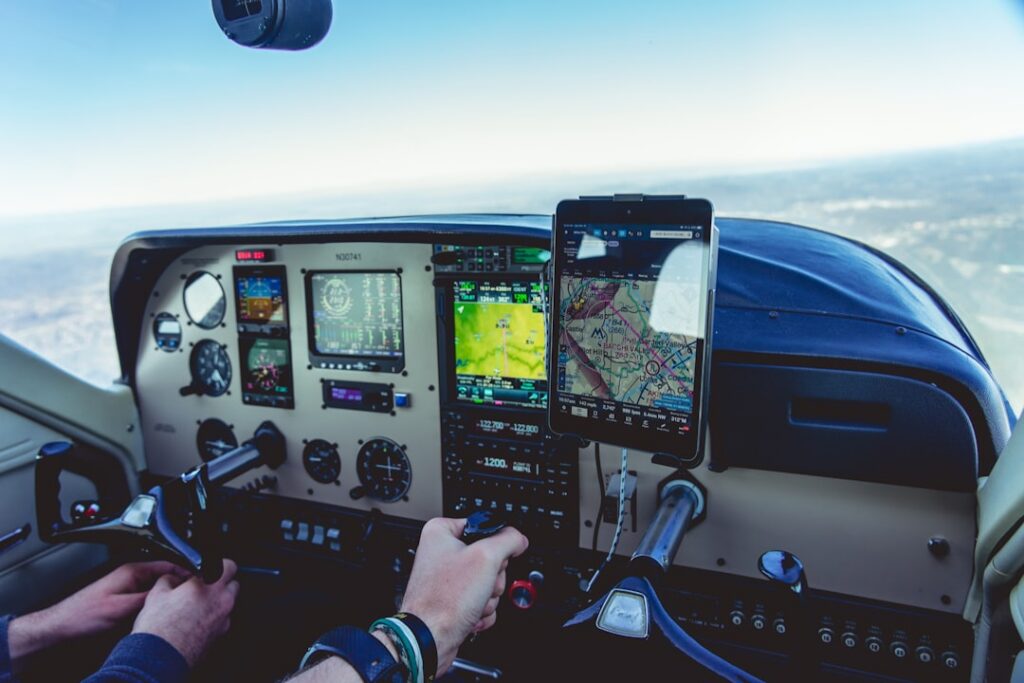
Experience the thrill of piloting commercial aircraft from the palm of your hand, exploring realistic flight routes across continents with professional-grade aviation simulation technology.


Mobile aviation simulators have transformed how enthusiasts and aspiring pilots engage with flight training.
Anúncios
What once required expensive desktop setups and specialized hardware now fits comfortably in your pocket, delivering authentic cockpit experiences with stunning visual fidelity and accurate physics modeling.

Modern smartphone flight simulators bridge the gap between casual gaming and serious aviation training. They offer comprehensive control systems, global navigation capabilities, and detailed aircraft systems that mirror real-world operations. Whether you’re planning a short regional hop or a transcontinental journey, these applications provide the tools needed for authentic flight experiences.
Anúncios
✈️ Understanding Professional Flight Simulation on Mobile Devices
The evolution of mobile processors has enabled sophisticated flight dynamics previously exclusive to desktop platforms. Current-generation smartphones pack computational power rivaling computers from just a few years ago, making realistic aerodynamics, weather systems, and terrain rendering possible in portable form factors.
Professional-grade mobile flight simulators incorporate multiple control schemes to accommodate different skill levels and preferences. Touchscreen interfaces provide intuitive tilt-based steering for beginners, while advanced users can connect Bluetooth controllers or specialized yokes for precision input. Some applications support multi-touch gestures mapped to throttle, flaps, landing gear, and other critical aircraft systems.
The physics engines powering these simulations calculate thousands of variables per second. Wing lift coefficients, drag calculations, engine thrust curves, and weight distribution all factor into how aircraft respond to pilot inputs. This mathematical rigor ensures that a heavy cargo plane handles differently from a nimble business jet, just as in actual aviation.
Realistic Flight Controls at Your Fingertips
Touchscreen flight controls have matured significantly since early mobile aviation games. Modern implementations feature customizable HUDs (heads-up displays) where pilots can position virtual instruments according to personal preference. Primary flight instruments include the attitude indicator, altimeter, airspeed indicator, vertical speed indicator, and heading compass—all rendered with crisp graphics readable even on smaller screens.
Advanced autopilot systems replicate functionalities found in commercial airliners. Pilots can engage altitude hold, heading select, approach modes, and even full autoland capabilities for challenging weather conditions. These systems teach proper autopilot management, a crucial skill for real-world aviation where automated systems handle significant portions of modern flights.
🌍 Global Destinations and Route Planning
Top-tier mobile flight simulators feature comprehensive global coverage with thousands of airports accurately modeled from satellite imagery and aeronautical databases. Major international hubs showcase detailed terminal buildings, taxiway layouts, and approach lighting systems, while smaller regional airports maintain geographic accuracy even if architectural details are simplified.
Flight planning tools within these applications rival professional software used by actual airlines. Pilots can:
- Select departure and arrival airports from worldwide databases
- Generate realistic flight plans following actual airways and navigation fixes
- Review METAR weather reports for departure, destination, and alternate airports
- Calculate fuel requirements based on aircraft type, payload, and route distance
- File simulated flight plans with virtual air traffic control networks
- Access approach plates and airport diagrams for navigation reference
The ability to fly anywhere on Earth opens remarkable possibilities. You might start your morning with a scenic approach into Hong Kong’s challenging Kai Tak Airport (recreated historically), spend your lunch break navigating the congested airspace around London Heathrow, and end your evening with a sunset landing in Los Angeles—all without leaving your couch.
Regional Diversity and Terrain Rendering
Geographic variety significantly enhances the simulation experience. Flying over the Himalayas presents different challenges than crossing the flat Midwest or navigating the Caribbean islands. Mobile simulators utilize elevation data and satellite textures to recreate these environments with impressive fidelity.
Mountain flying requires understanding terrain clearance, density altitude effects at high elevations, and how terrain channels weather patterns. Coastal operations involve dealing with marine layers, sea breezes, and the unique challenges of island approaches where navigation aids may be limited. Desert regions test fuel planning and alternate airport selection when diverts are hundreds of miles apart.
📱 Aircraft Selection and Fleet Variety
Comprehensive aircraft libraries distinguish premium mobile flight simulators from simple arcade games. Leading applications offer dozens of meticulously modeled aircraft spanning multiple categories:
| Aircraft Category | Examples | Flight Characteristics |
|---|---|---|
| Wide-body Airliners | Boeing 777, Airbus A380 | Long-range capability, complex systems, heavy handling |
| Narrow-body Jets | Boeing 737, Airbus A320 | Versatile workhorses, medium range, responsive controls |
| Regional Jets | Embraer E-Jets, CRJ series | Short-haul operations, quick turnarounds, economical |
| Business Jets | Cessna Citation, Gulfstream | High-speed cruise, luxury interiors, small airports |
| General Aviation | Cessna 172, Piper Cub | Training platforms, visual flight rules, slower speeds |
| Military Aircraft | F-16, F/A-18 | High performance, aerobatic capability, tactical operations |
Each aircraft category requires different piloting techniques. Landing a massive A380 demands gentle control inputs and early planning for its substantial momentum. Conversely, a nimble Cessna 172 responds immediately to pilot commands and can operate from short grass strips. Learning these nuances builds versatile piloting skills applicable across multiple aircraft types.
System Depth and Cockpit Functionality
Aircraft system modeling varies between applications, with premium simulators offering functional cockpits where nearly every switch, dial, and button serves a purpose. Pilots can manage electrical systems, hydraulics, fuel distribution, pressurization, and anti-icing equipment just as real flight crews do.
Startup procedures follow actual checklists. You’ll initialize the inertial reference system, set the flight management computer, configure flaps for takeoff weight, and perform pre-departure checks before advancing throttles for departure. This procedural rigor teaches discipline and attention to detail—qualities essential for aviation safety.
🌦️ Weather Systems and Environmental Challenges
Dynamic weather integration elevates mobile flight simulation from simple flying to genuine aviation decision-making. Real-time weather data pulls actual conditions from meteorological services, placing virtual aircraft into the same wind, clouds, and visibility pilots face worldwide at that exact moment.
Weather affects every flight phase differently. During takeoff, crosswinds test rudder skills as pilots maintain centerline alignment. Climbing through cloud layers on instruments requires trusting gauges rather than visual references—a fundamental skill for instrument-rated pilots. Cruise altitude winds determine ground speed and fuel consumption, potentially requiring mid-flight route adjustments.
Approach and landing in adverse weather separates competent pilots from truly skilled ones. Flying an ILS (Instrument Landing System) approach to minimums in low visibility demands precise navigation and steady control. Windshear, microbursts, and gusty conditions near thunderstorms create scenarios where go-arounds become the safest option—teaching judgment alongside technical skills.
Time-of-Day Variations and Night Operations
The visual environment changes dramatically between day and night operations. Night flying introduces unique challenges: reduced visibility outside the cockpit, greater reliance on instruments, and the need to identify airports by their beacon lights and approach lighting configurations.
Sunset and sunrise create particularly beautiful but challenging conditions. The golden hour produces spectacular visuals as sunlight paints clouds in orange and purple hues, yet glare can make runway identification difficult during final approach. Dawn departures reward early risers with serene atmospheric conditions and often smoother air before daytime heating creates turbulence.
👥 Multiplayer and Virtual Air Traffic Control
Solo flight builds skills, but multiplayer environments add social dimensions mirroring real aviation’s collaborative nature. Shared airspace requires communication, coordination, and adherence to air traffic control instructions—or pilot-to-pilot coordination when ATC isn’t available.
Virtual ATC networks staff controllers at major airports during peak hours, providing realistic radio communications. Controllers issue taxi instructions, departure clearances, vectors for traffic separation, and approach clearances following actual phraseology. This exposure familiarizes users with aviation communication protocols before they ever key a real aircraft radio.
Flying alongside other pilots creates emergent experiences impossible in solo mode. You might find yourself number seven in the landing sequence at Dubai, managing speed and spacing to maintain safe separation. Or perhaps you’ll participate in organized group flights recreating historical routes or charity events, fostering community connections through shared passion.
📊 Training Value and Skill Development
While mobile simulators cannot replace certified flight training devices, they offer legitimate educational value for both aspiring pilots and aviation enthusiasts. Procedural familiarity gained through simulation transfers directly to actual aircraft operations.
Student pilots use mobile simulators for instrument scan practice, developing the disciplined eye movement pattern essential for maintaining aircraft control without external visual references. Radio communication practice reduces anxiety before first ATC interactions in real aircraft. Navigation procedures become second nature through repetition in the simulator before application in actual flight training.
Experienced pilots maintain proficiency during periods away from actual aircraft. Reviewing approach procedures for unfamiliar airports, practicing emergency scenarios, or simply staying mentally engaged with aviation helps maintain the sharp situational awareness required for safe operations.
Understanding Aviation Principles
Interactive learning through simulation clarifies concepts that remain abstract in textbooks alone. Observing how increasing aircraft weight lengthens takeoff distance demonstrates performance limitations tangibly. Watching groundspeed change when turning in strong winds illustrates the relationship between headings, wind correction angles, and track over the ground.
Systems understanding deepens through hands-on interaction. Managing fuel distribution maintains proper center-of-gravity position. Monitoring engine parameters teaches the relationship between thrust settings, fuel flow, and temperature limitations. These lessons build the systems knowledge foundation required for more advanced pilot certifications.
🎮 Customization and Realism Settings
Accessibility remains important even in serious simulations. Adjustable difficulty settings allow users to tailor experiences to their skill level and available time. Casual users might enable unlimited fuel, simplified aircraft systems, and forgiving flight models that prioritize enjoyment over strict realism.
Conversely, simulation purists can activate every available realism option: true-to-life fuel consumption, mandatory checklist compliance, realistic aircraft failures, and strict ATC adherence. Some pilots create personal challenges by restricting themselves to visual flight rules only, or flying vintage aircraft using period-appropriate navigation techniques without modern GPS assistance.
Visual settings balance performance and appearance based on device capabilities. Newer flagship smartphones render detailed aircraft exteriors, volumetric clouds, and high-resolution terrain seamlessly. Older devices can reduce graphical complexity while maintaining smooth frame rates—ensuring nobody misses out due to hardware limitations.
🚀 Future Developments in Mobile Aviation Simulation
Technology advancement continues pushing mobile flight simulation boundaries. Augmented reality integration could overlay cockpit instruments onto real-world views through your camera, creating mixed-reality flight experiences. Enhanced haptic feedback might simulate turbulence, control resistance, and landing impacts through device vibration motors.
Machine learning algorithms could create adaptive training programs that identify individual weaknesses and design practice scenarios targeting specific skill gaps. Imagine an intelligent instructor that notices your crosswind landing technique needs work and automatically generates appropriate practice sessions at airports known for gusty conditions.
Cloud computing may enable even more detailed aircraft systems and global scenery by offloading processing to remote servers. This would allow mobile devices to access simulation fidelity currently reserved for high-end desktop systems, democratizing access to premium flight simulation experiences regardless of device specifications.
💡 Getting Started with Your Aviation Journey
Beginning your mobile flight simulation adventure requires minimal investment beyond the application itself. Start with familiar aircraft—the Cessna 172 serves as an excellent training platform due to its forgiving flight characteristics and straightforward systems. Select a nearby airport you recognize, perhaps one you’ve flown from commercially, to build confidence through familiar surroundings.
Initial flights should focus on basic control familiarity. Practice maintaining straight-and-level flight at various speeds. Execute gentle turns while maintaining altitude. Climb to a safe altitude, then reduce power and practice descents at different rates. These fundamental skills form the foundation for every subsequent aviation maneuver.
As comfort grows, introduce complexity gradually. Add weather challenges once calm-wind flying feels natural. Attempt your first instrument approach after mastering visual patterns. Join multiplayer sessions only after solo operations become routine. This progressive learning approach prevents overwhelm while steadily building comprehensive piloting capabilities.
Online communities surrounding mobile flight simulators offer invaluable resources. Tutorial videos demonstrate proper procedures. Forum discussions answer specific questions. Virtual airlines provide structured environments with route assignments, standards, and mentorship from experienced virtual pilots eager to share knowledge.
The journey from novice to accomplished virtual pilot mirrors actual aviation training: challenging yet rewarding, demanding persistence but delivering profound satisfaction. Each successful landing builds confidence. Every smoothly executed approach reinforces technique. Gradually, actions that initially required intense concentration become fluid, instinctive responses—the hallmark of developing expertise in any complex skill.
Mobile flight simulation represents more than entertainment. It’s a portal into aviation’s fascinating world, a training tool for future pilots, and a community of like-minded enthusiasts sharing passion for flight. Whether you dream of professional aviation careers or simply enjoy the challenge of mastering complex systems, modern smartphone simulators deliver authentic experiences that were unimaginable just a decade ago.

Toni Santos is a visionary artisan and conceptual designer who channels the beauty of living organisms into structural expression. At Zureste, Toni explores the intricate elegance of insect anatomy, organic flow, and bioinspired design to create art that feels both natural and otherworldly.
Each creation Toni brings to life reflects a harmonic tension between structure and softness, wildness and control — echoing the complex intelligence found in the natural world. From beetle-like silhouettes to root-shaped contours, his work blurs the lines between biology, sculpture, and modern art.
Guided by fascination for metamorphosis, evolution, and pattern in nature, Toni’s pieces embody transformation. His BioLight Collection and conceptual series like Insect Type and Structure Aesthetics offer viewers more than aesthetic value — they present immersive experiences of living design.
As the creative force behind Zureste, Toni invites us to rethink beauty, architecture, and identity through a new lens — one shaped by wings, bones, spirals, and the microscopic poetry of the organic.
His creations reflect:
-
Design deeply rooted in the geometry of life
-
Inspiration from insects, roots, and the unseen natural order
-
A blend of science, spirituality, and visual storytelling
Whether you’re a lover of strange beauty, an admirer of evolution’s artistry, or a creative mind seeking something different, Toni welcomes you into a world where living forms become meaning, and surreal becomes sublime.